Geology & formation
Ellensburg Blue Agates
Nick Zentner introduces the geological setting of Ellensburg blue agates. This regional lecture offers a substantial starting point for thinking about the processes behind a polished stone.
Watch on YouTubeMATERIAL · CULTURAL MEMORY · ARTISTIC MEANING
A growing collection exploring the stones represented in Jabbi’s artwork. Begin with an image, discover the material and its histories, then follow selected films into further exploration.
“Sacred” opens a question about how people give materials meaning. Each study distinguishes documented cultural traditions from contemporary artistic interpretation.
THE A–Z COLLECTION
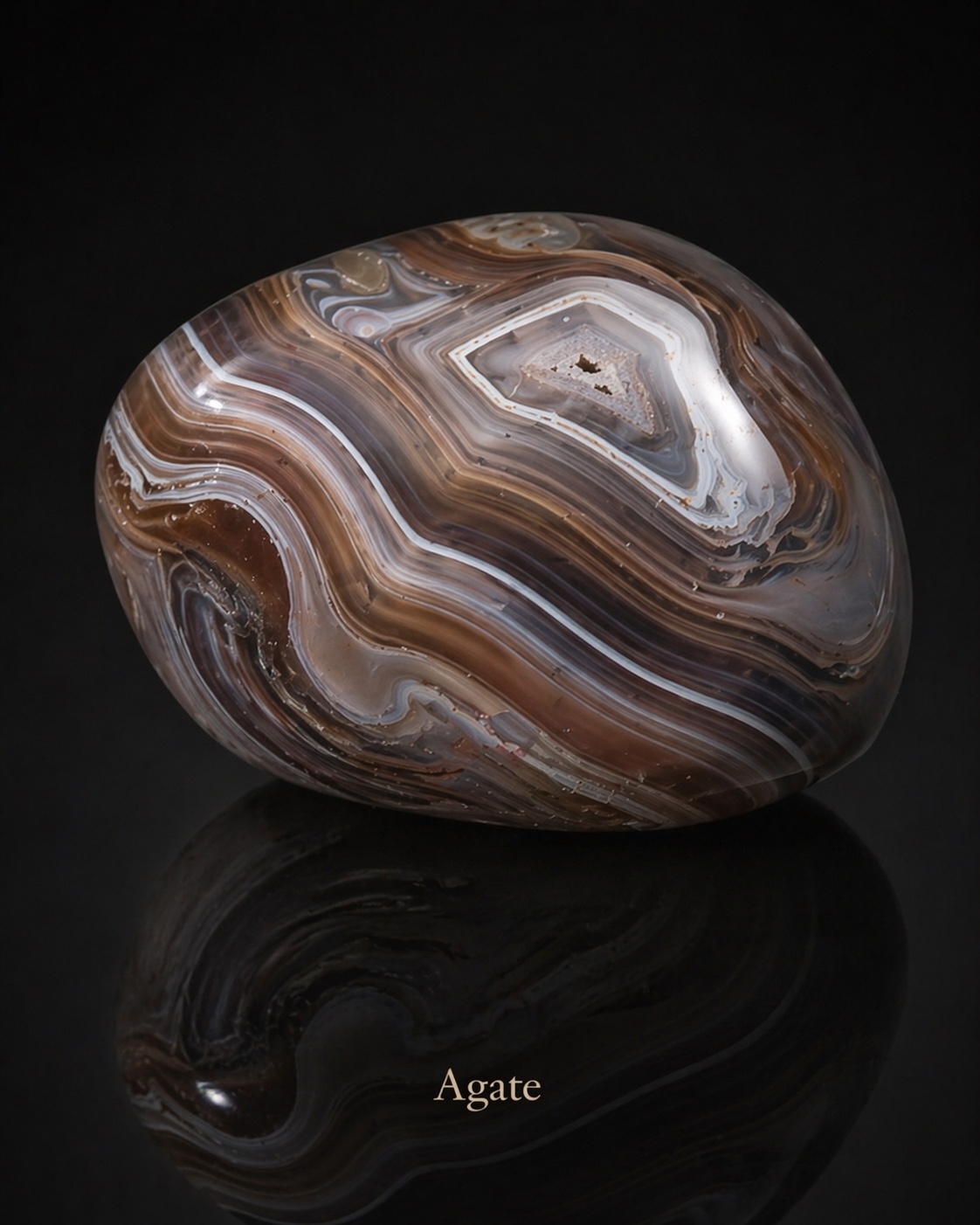
A · AGATE
Geological pattern, Egyptian amulets, Renaissance cameos and contemporary carving open a conversation about memory and artistic interpretation.
View the image, read the article and explore four films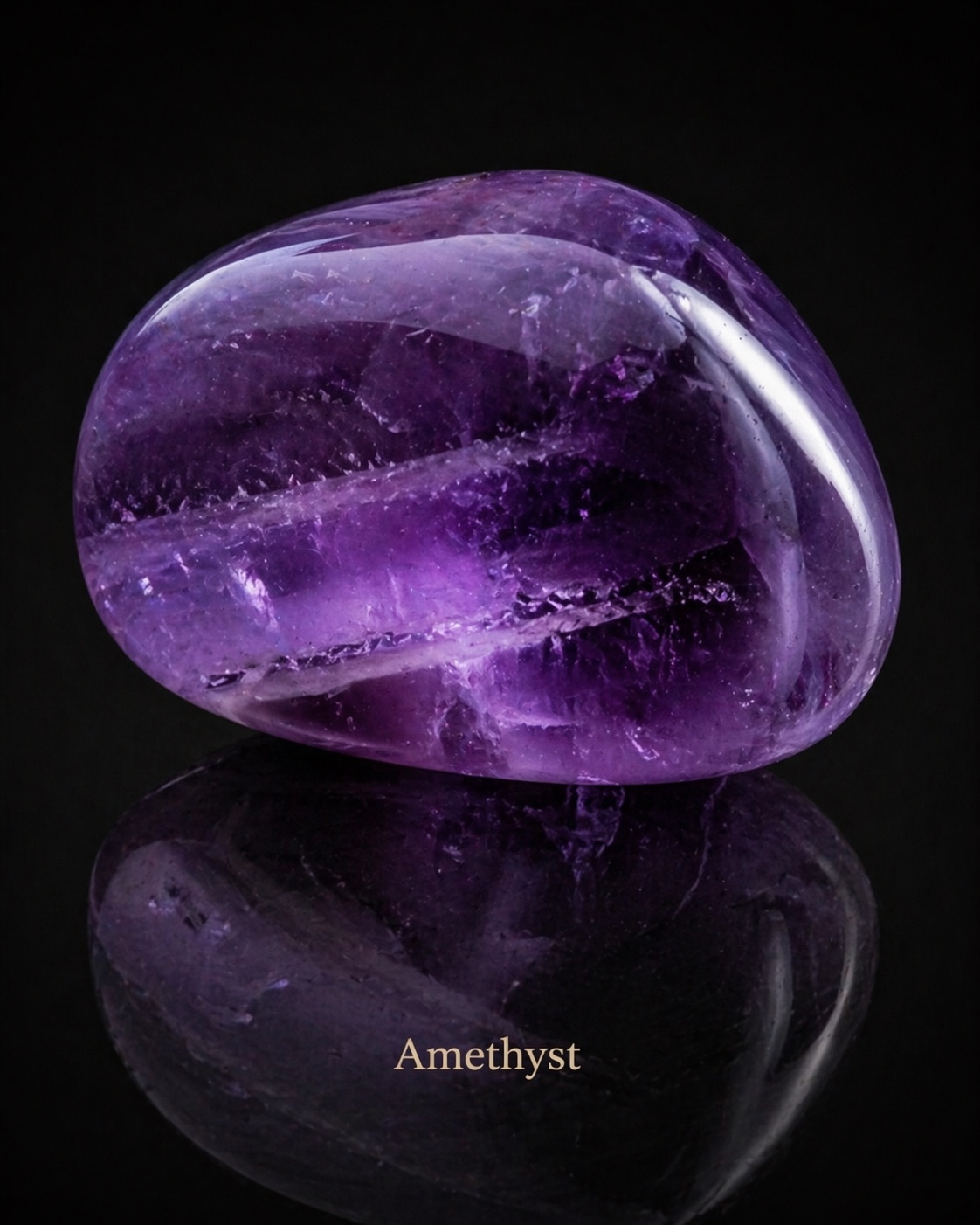
A · AMETHYST
Purple quartz, ancient journeys, the art of cutting, and the meanings of an illuminated interior.
View the image, read the article and explore four films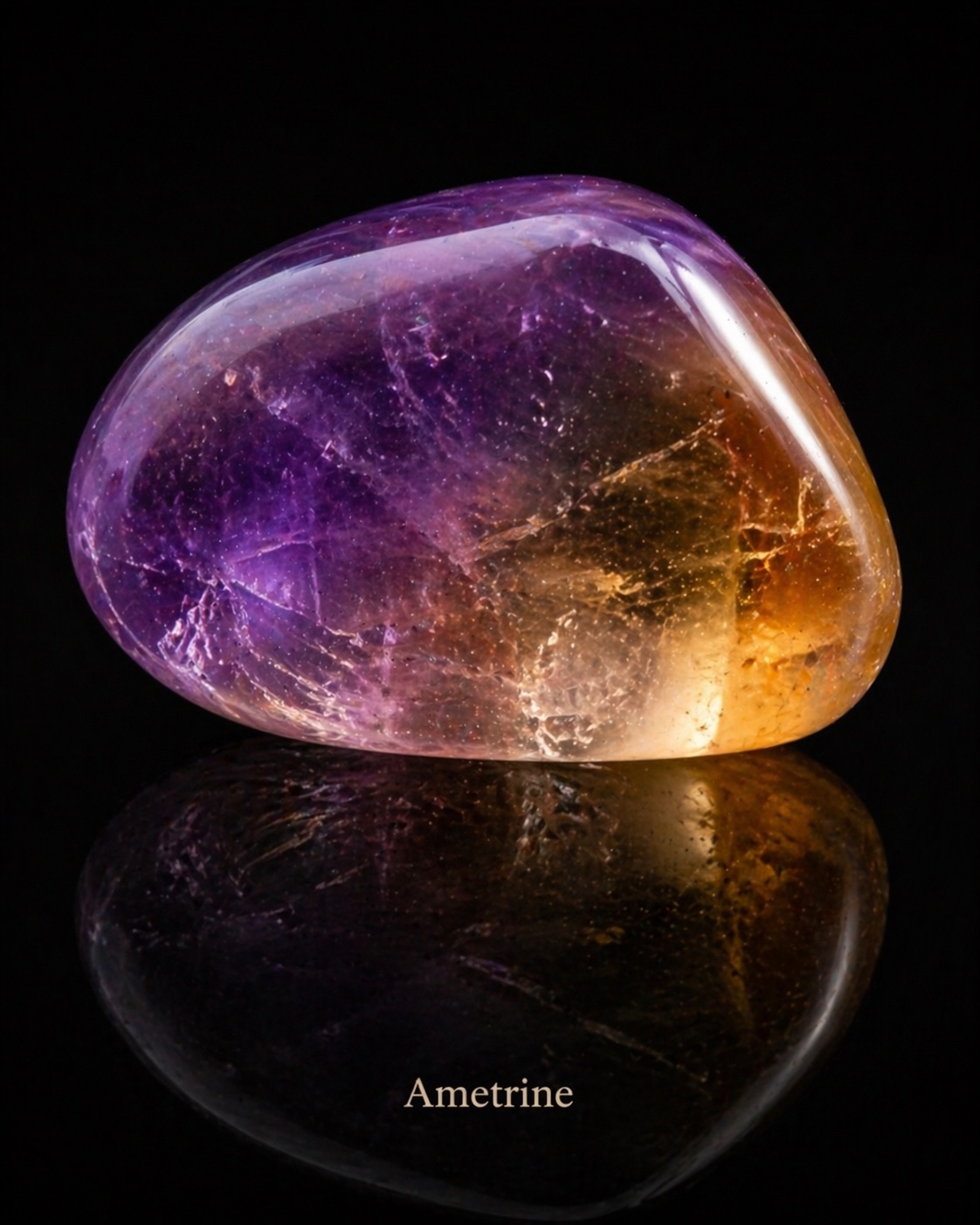
A · AMETRINE
Purple and gold within one quartz: Bolivian origins, the choices of the cutter, and an artistic language of meeting and transition.
View the image, read the article and explore four films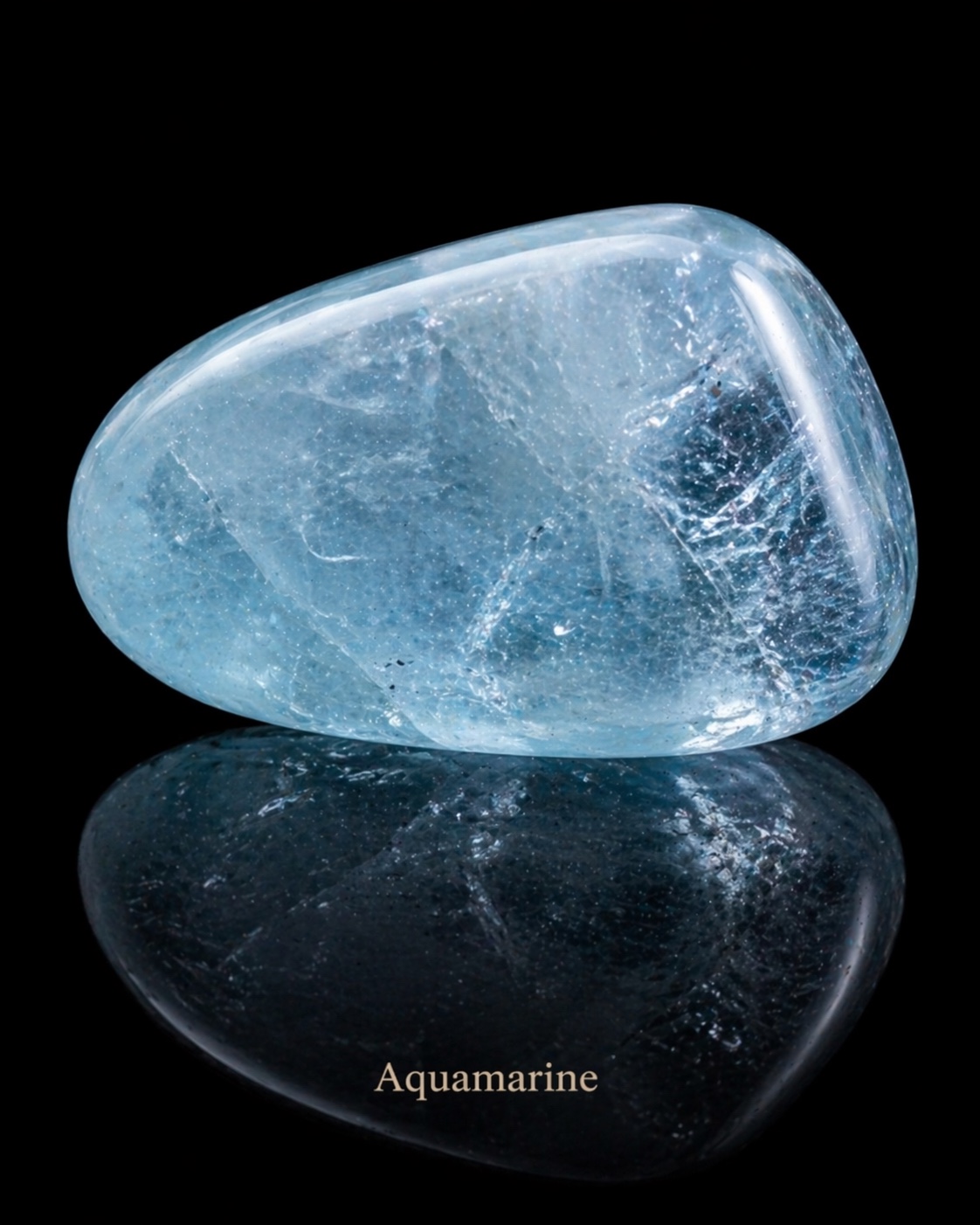
A · AQUAMARINE
Blue beryl, journeys from the earth, sea-related lore and the sculptural possibilities of light.
View the image, read the article and explore four films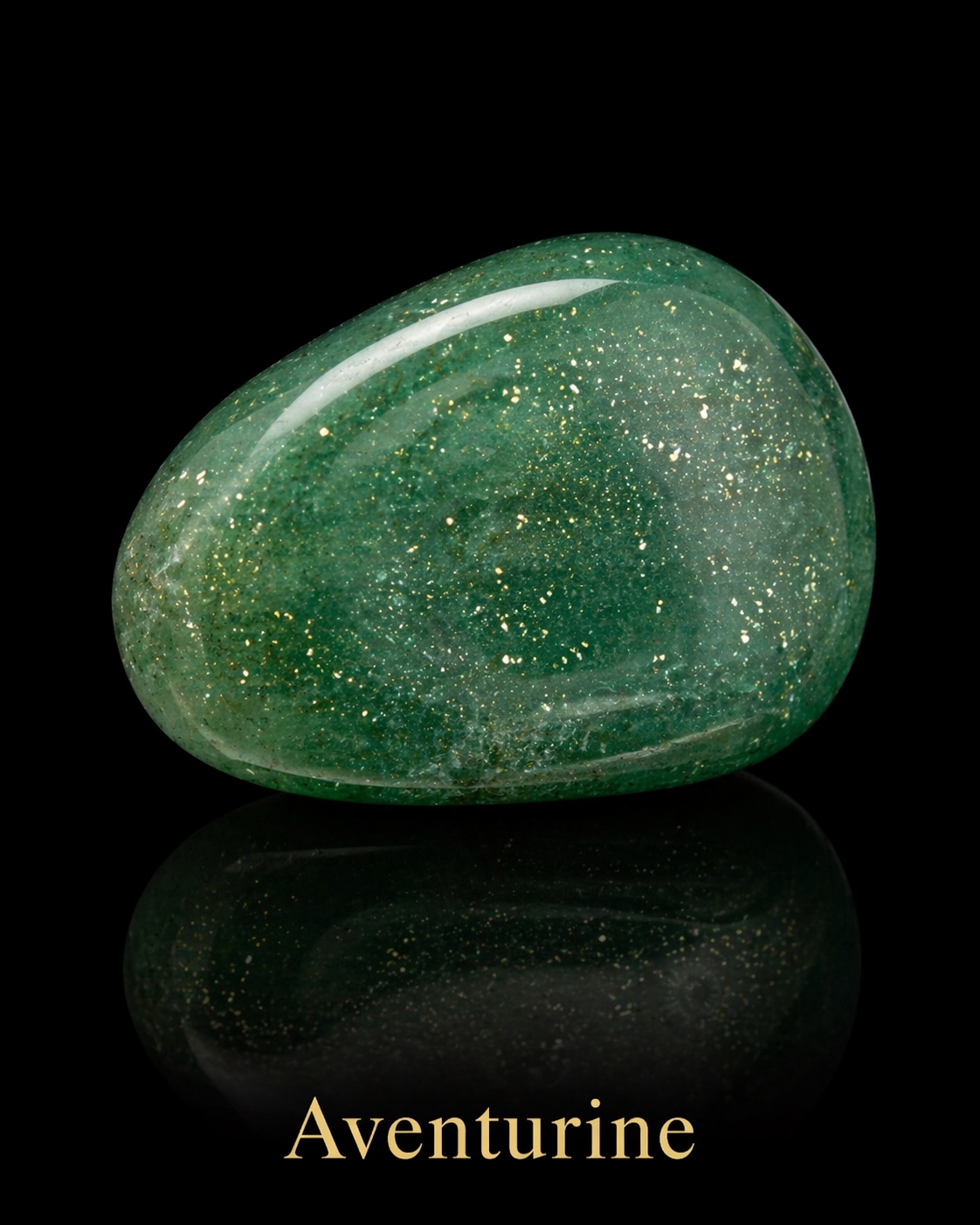
A · AVENTURINE
Reflective inclusions, worked surfaces and documented objects open an enquiry into sparkle, attention and artistic possibility.
View the image, read the article and explore four films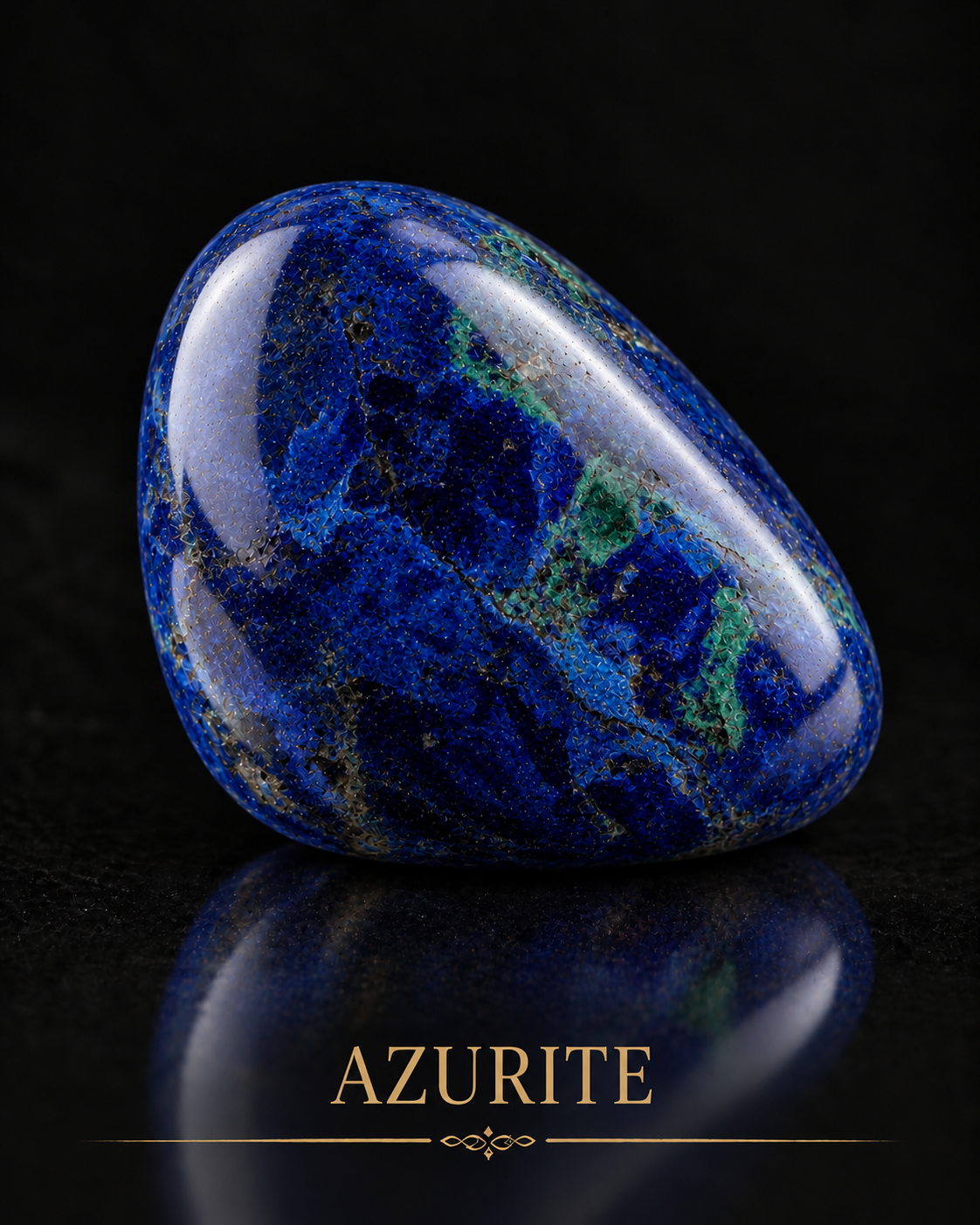
A · AZURITE
Copper minerals, Titian’s landscape and the transformation of stone into paint.
View the image, read the article and explore four films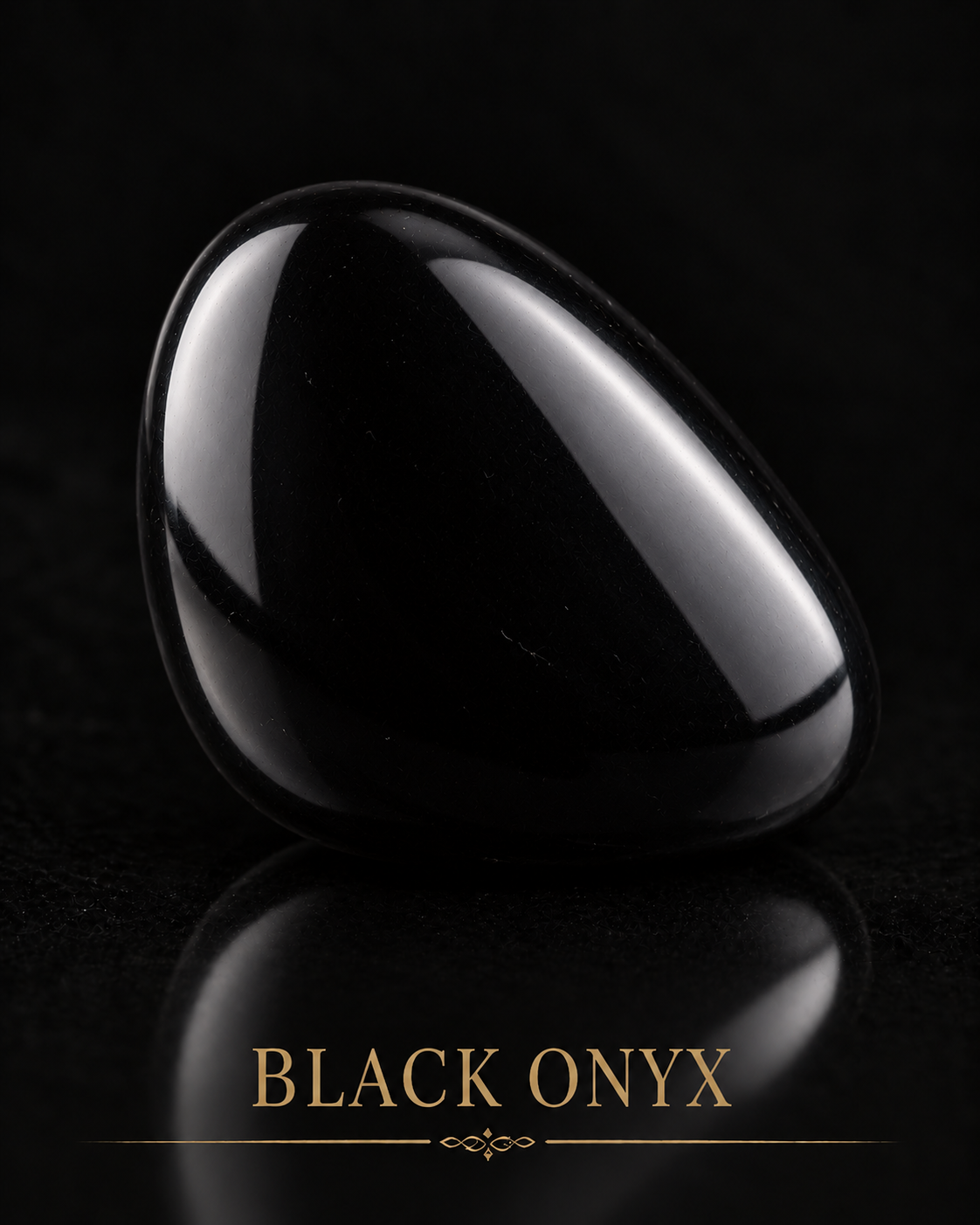
B · BLACK ONYX
Chalcedony, carved portraits and documented jewellery open a study of dark surfaces, contrast and artistic presence.
View the image, read the article and explore four films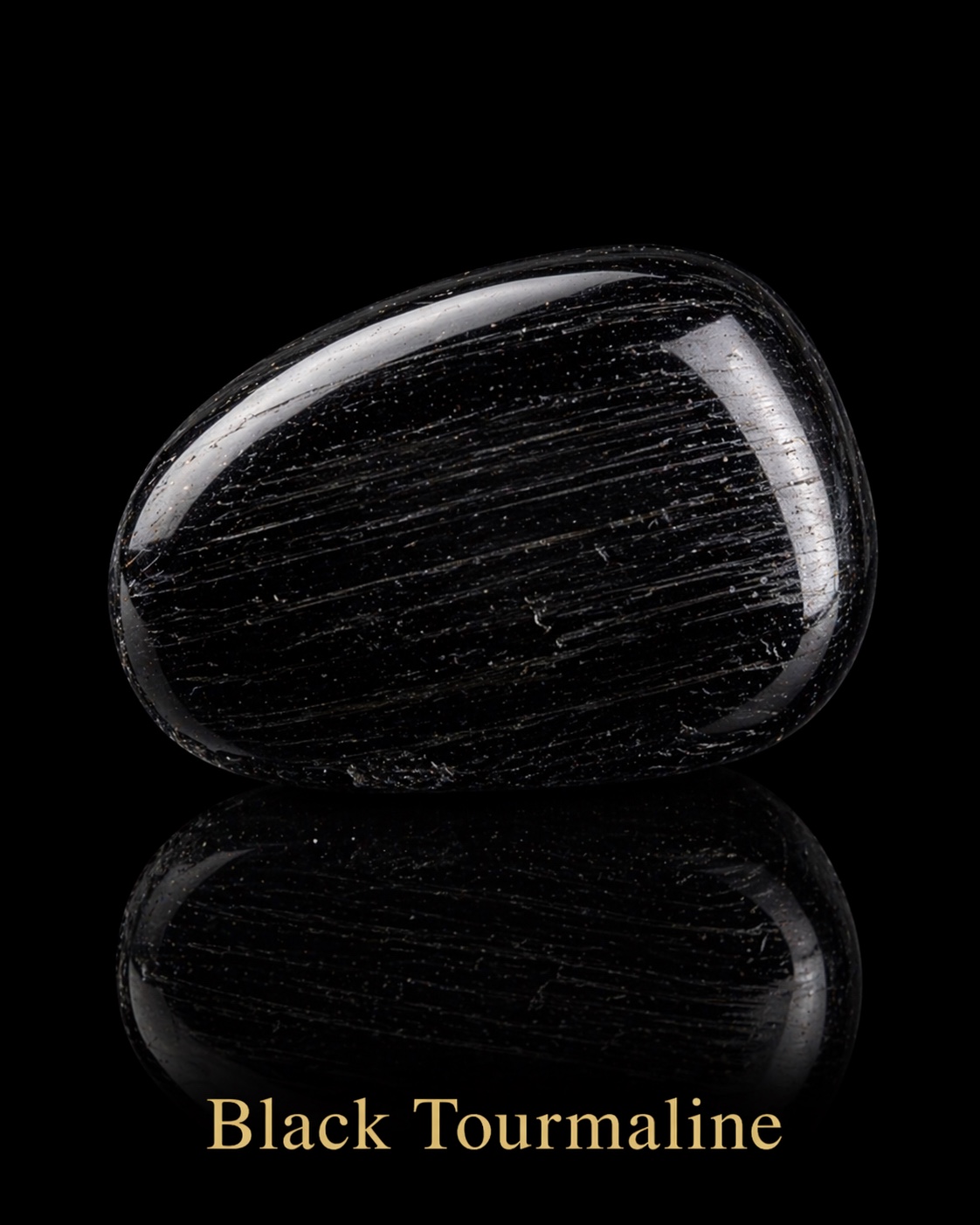
B · BLACK TOURMALINE
Mineral structure, documented uses and a dark reflective surface open an enquiry into remembrance, boundaries and artistic presence.
View the image, read the article and explore four films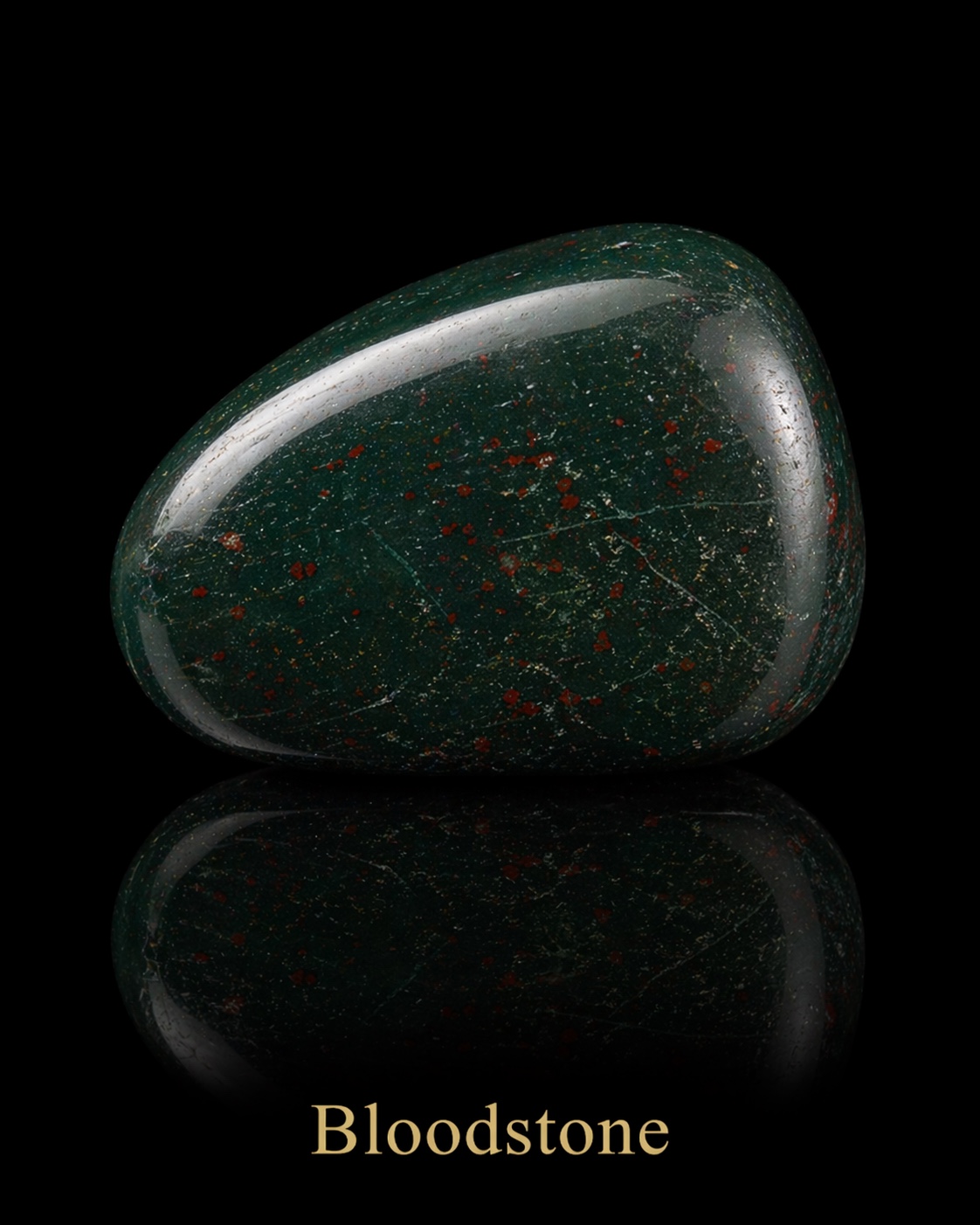
B · BLOODSTONE
Mineral pattern, devotional carving and decorative objects open an enquiry into colour, embodied memory and artistic interpretation.
View the image, read the article and explore four films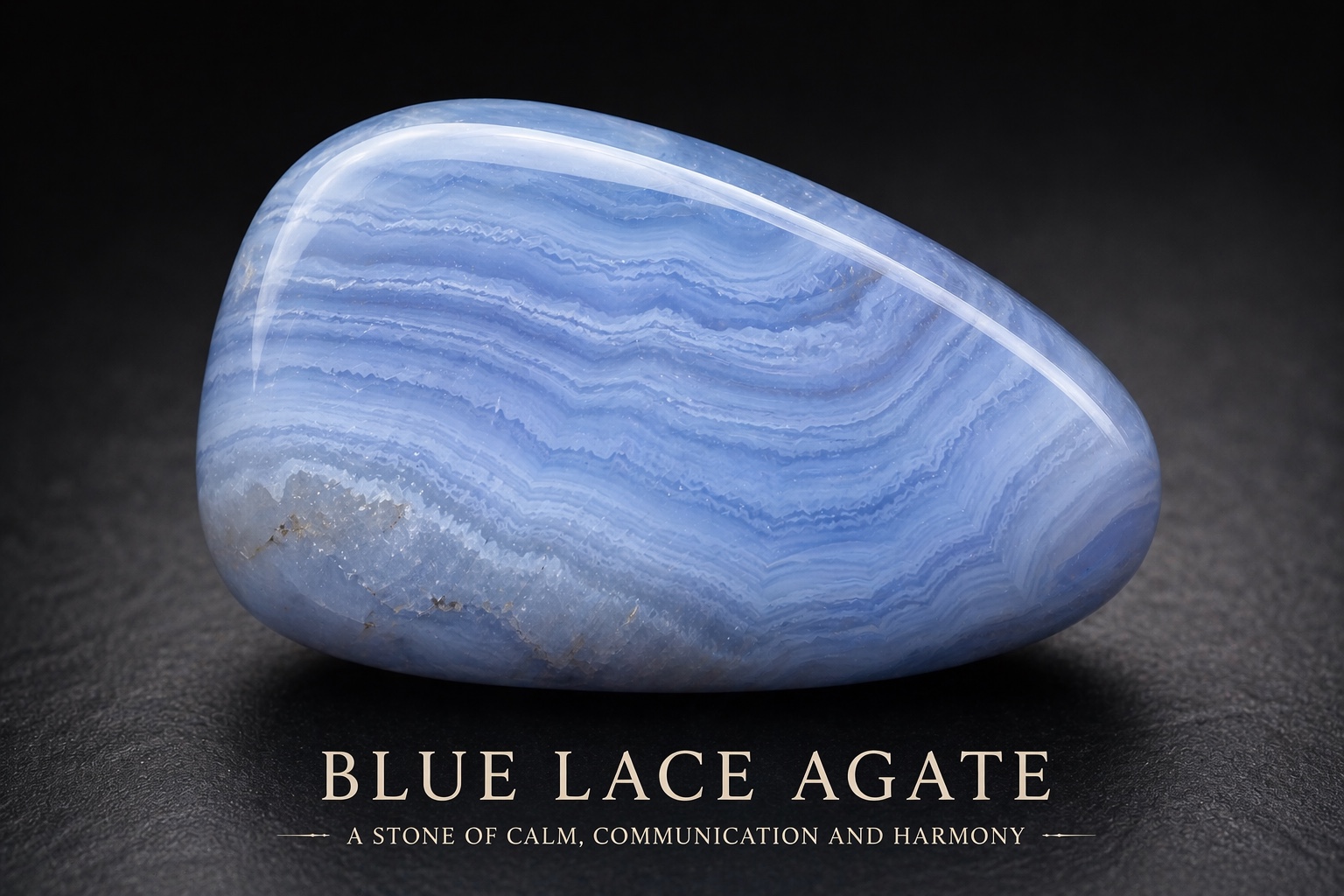
B · BLUE LACE AGATE
Namibian geology, the work of polishing, and the meanings a pale blue pattern can bring to contemporary art.
View the image, read the article and explore four films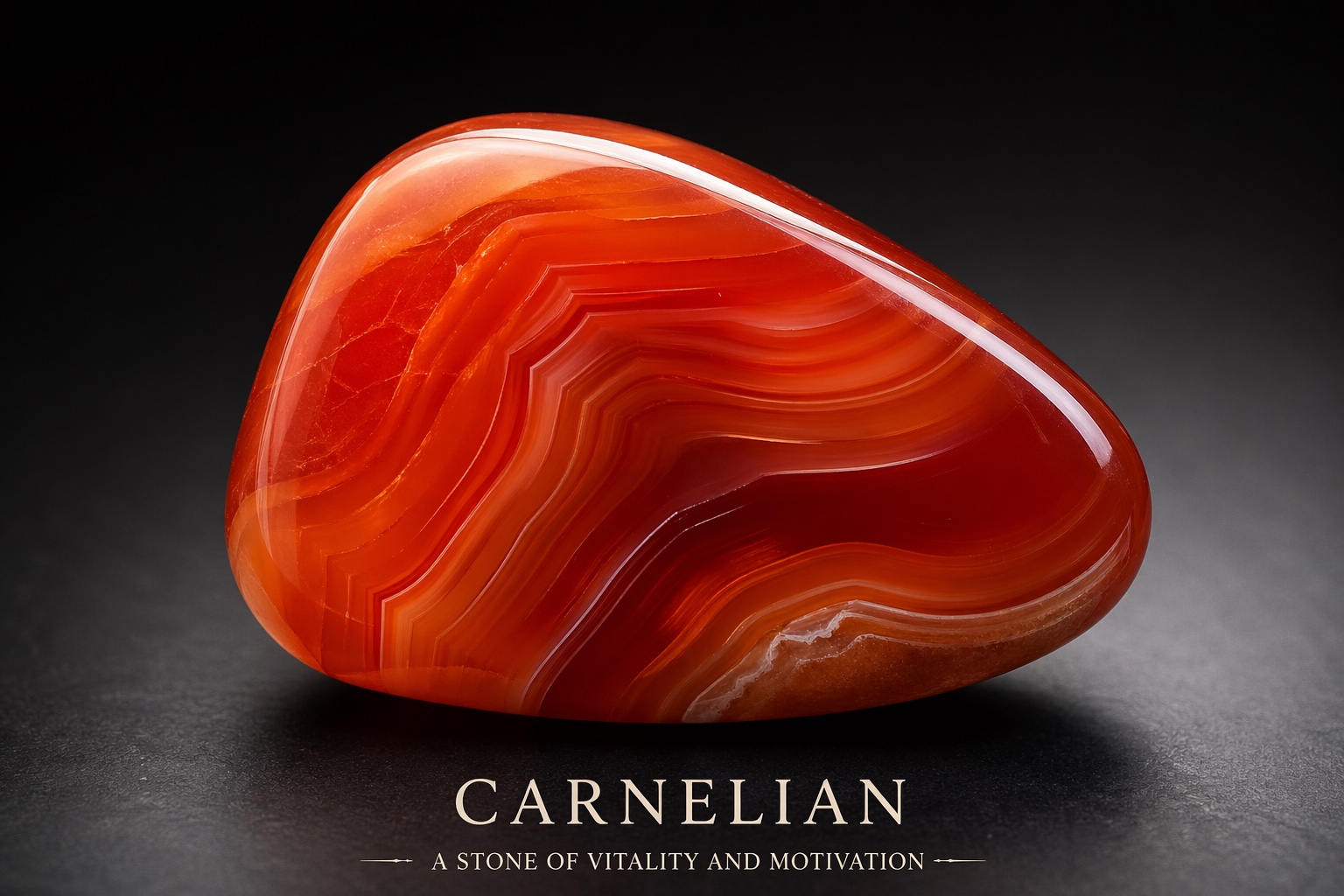
C · CARNELIAN
Chalcedony colour, Egyptian amulets, Roman carving and Indian bead craft open an enquiry into identity and cultural memory.
View the image, read the article and explore four films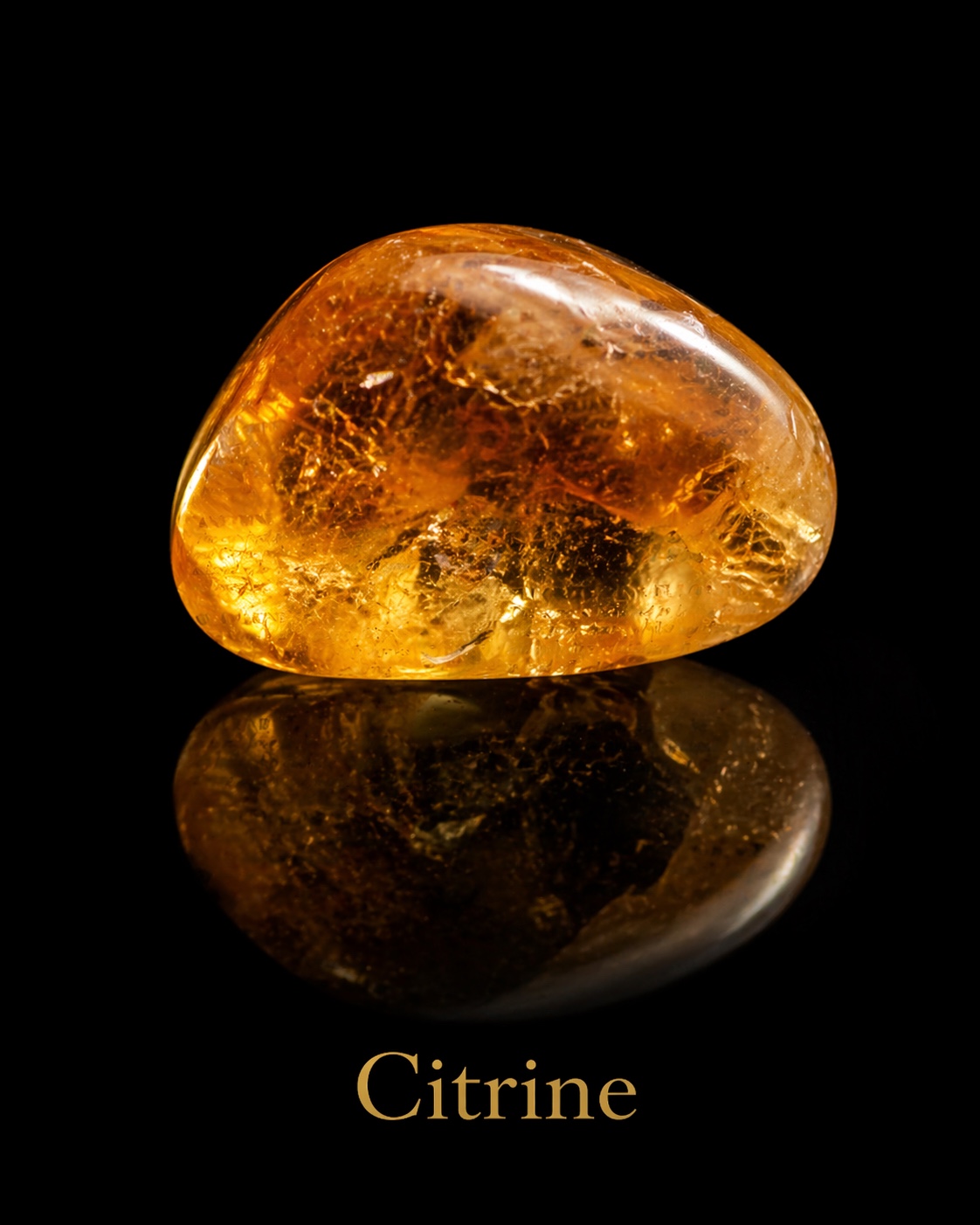
C · CITRINE
Quartz colour, treatment and documented jewellery open an enquiry into illumination, making and a complicated interior.
View the image, read the article and explore four films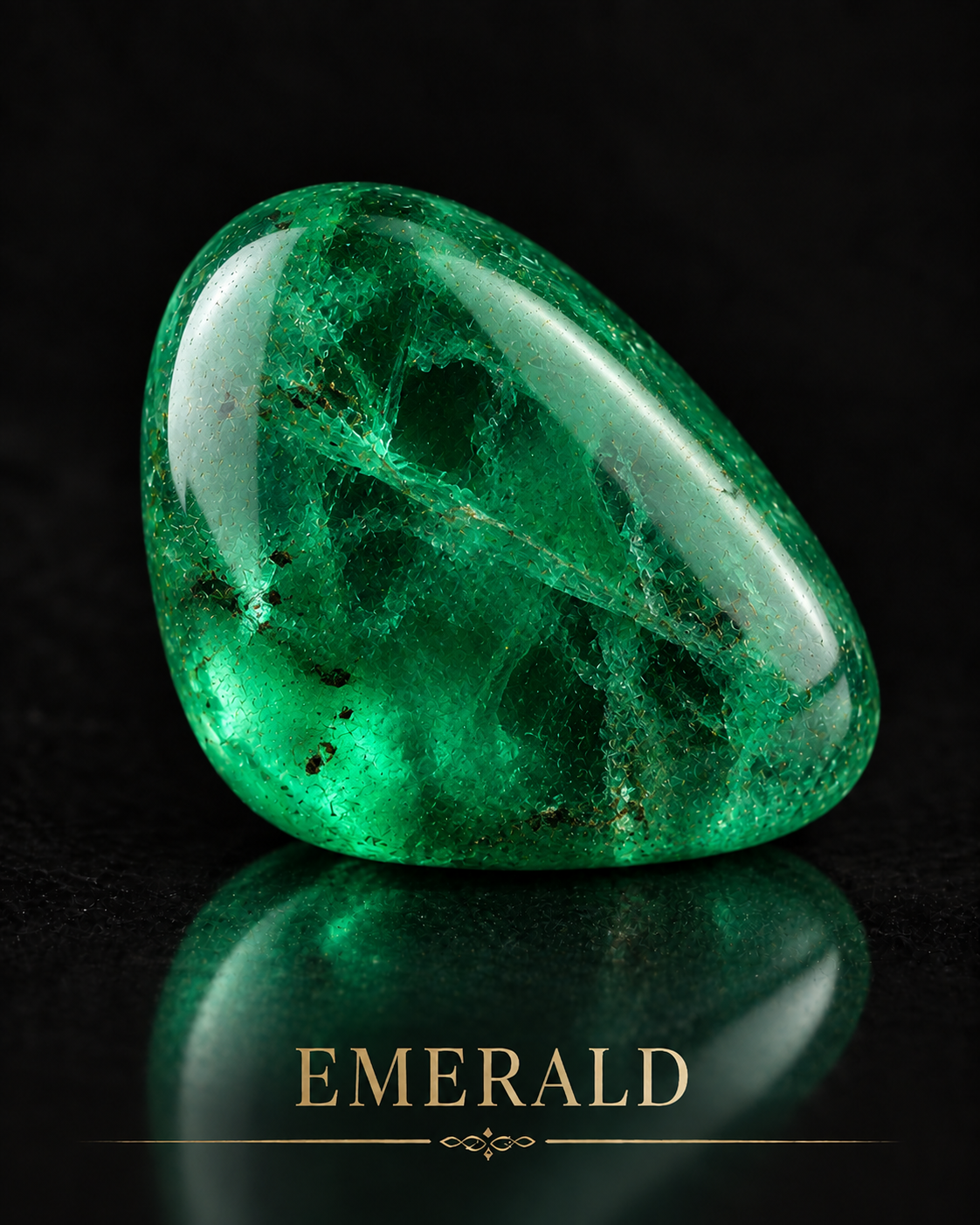
E · EMERALD
Egyptian mines, Renaissance jewellery and Mughal carving connect green beryl with renewal and material memory.
View the image, read the article and explore four films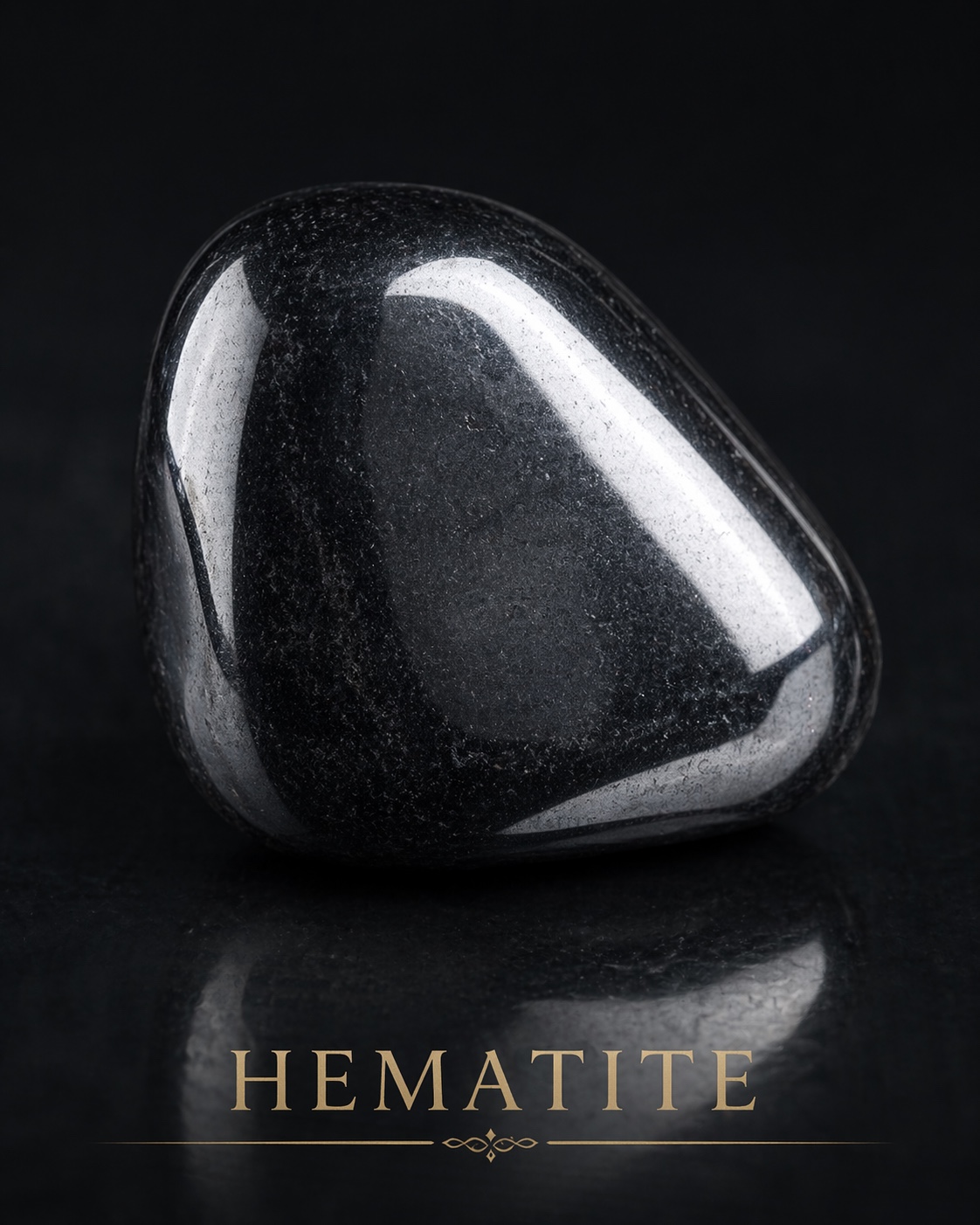
H · HEMATITE
A dark reflective surface, iron-rich landscapes, red pigment and ancient carved seals open an enquiry into weight, reflection and memory.
View the image, read the article and explore four films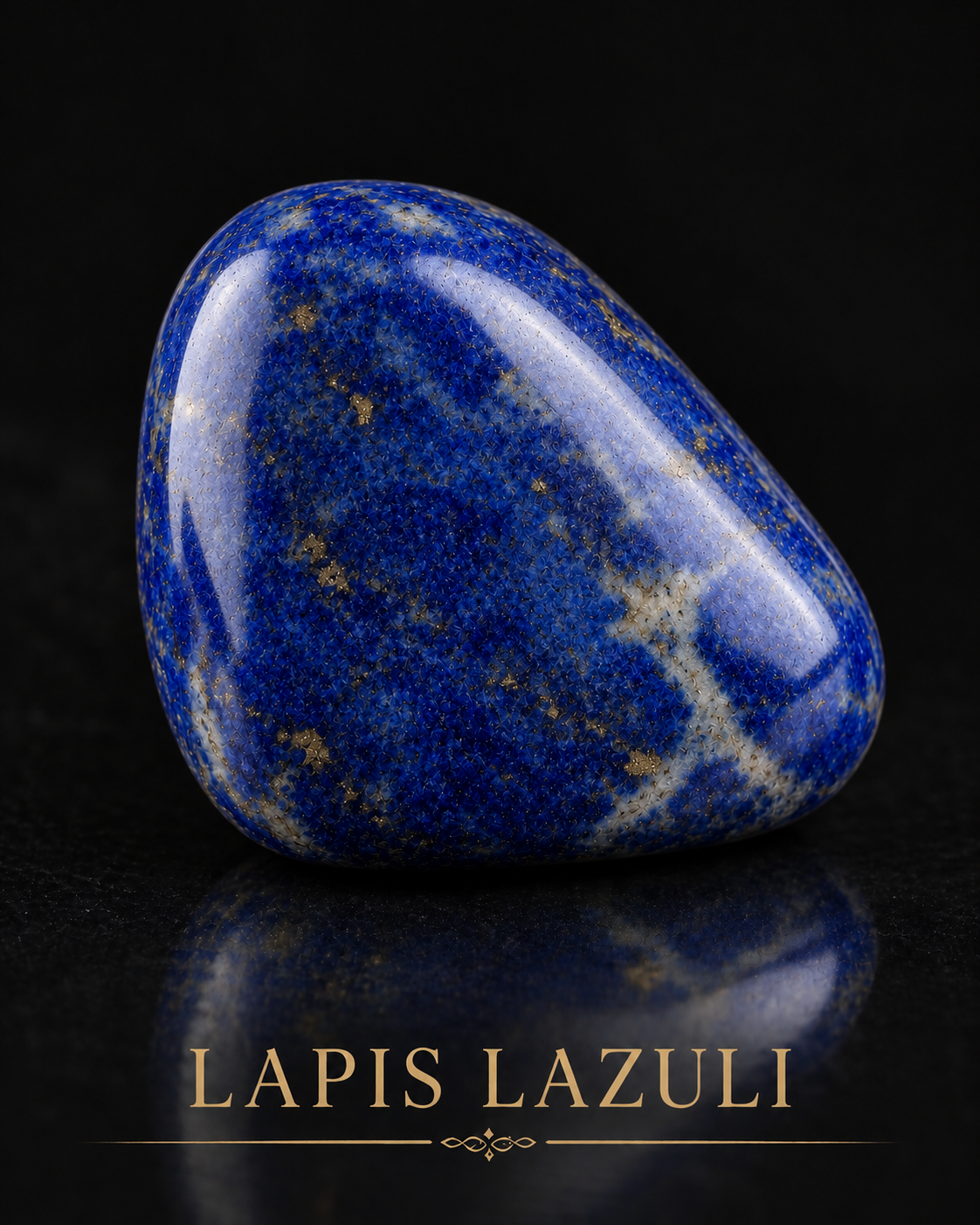
L · LAPIS LAZULI
Afghanistan’s Sar-e-Sang mines, ancient Egyptian sacred objects and natural ultramarine open a study of colour, craft and cultural memory.
View the image, read the article and explore four films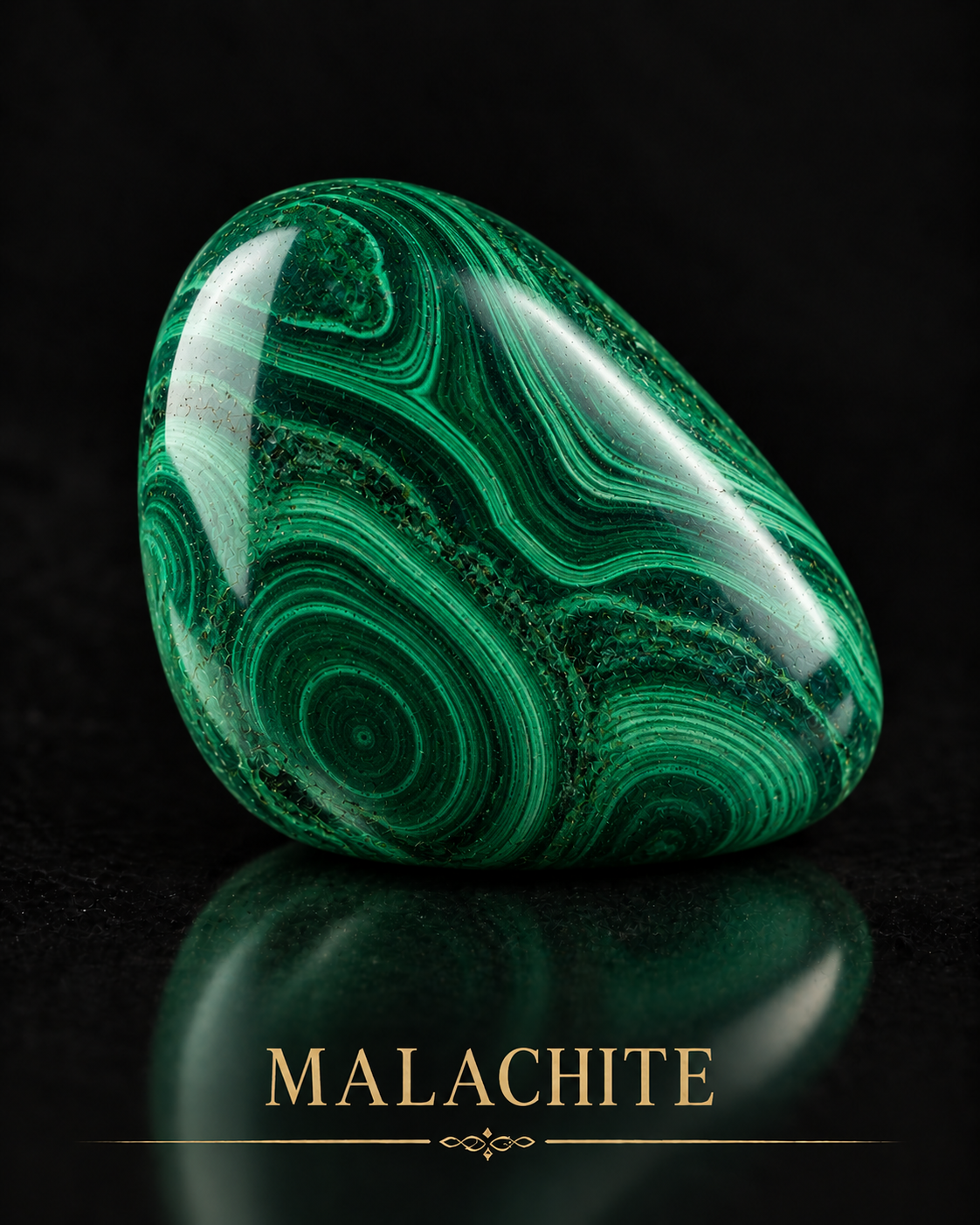
M · MALACHITE
Egyptian cosmetics, Congo mineral formations and Renaissance pigment practice.
View the image, read the article and explore four films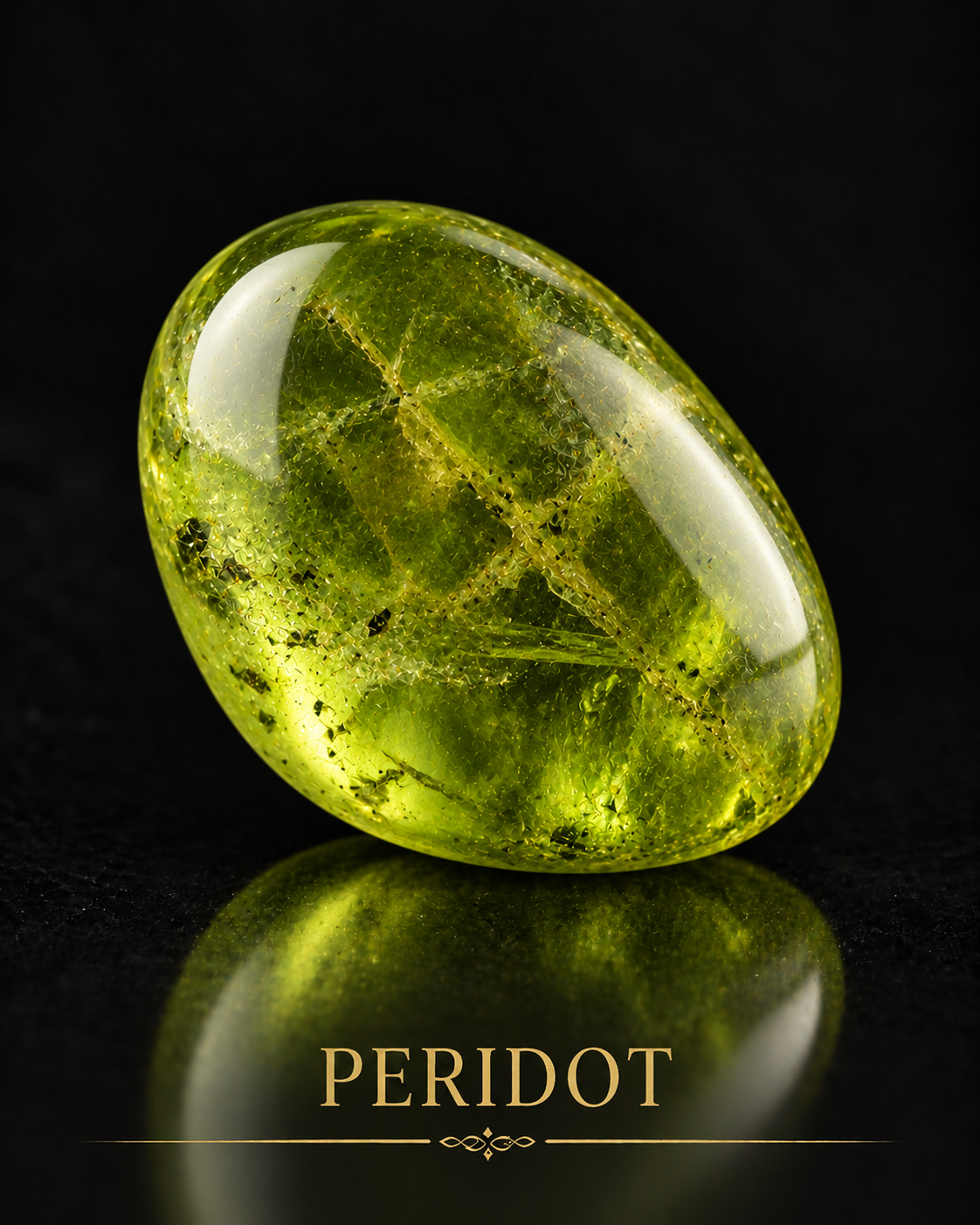
P · PERIDOT
Olivine colour, Egypt’s Zabargad Island and a later Renaissance Revival jewel.
View the image, read the article and explore four films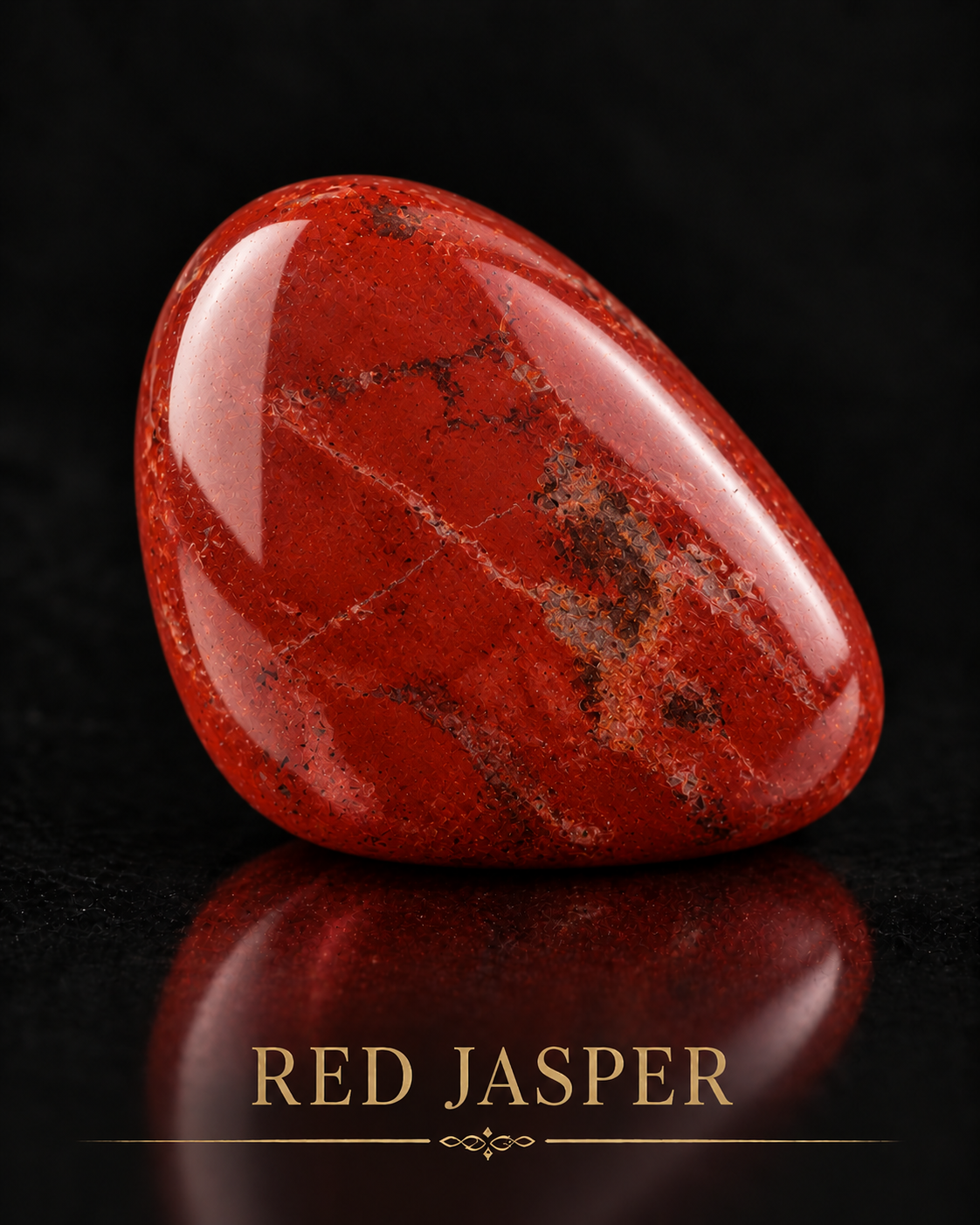
R · RED JASPER
Egyptian amulets, Medici hardstones and the artistic possibilities of an earthy red.
View the image, read the article and explore four films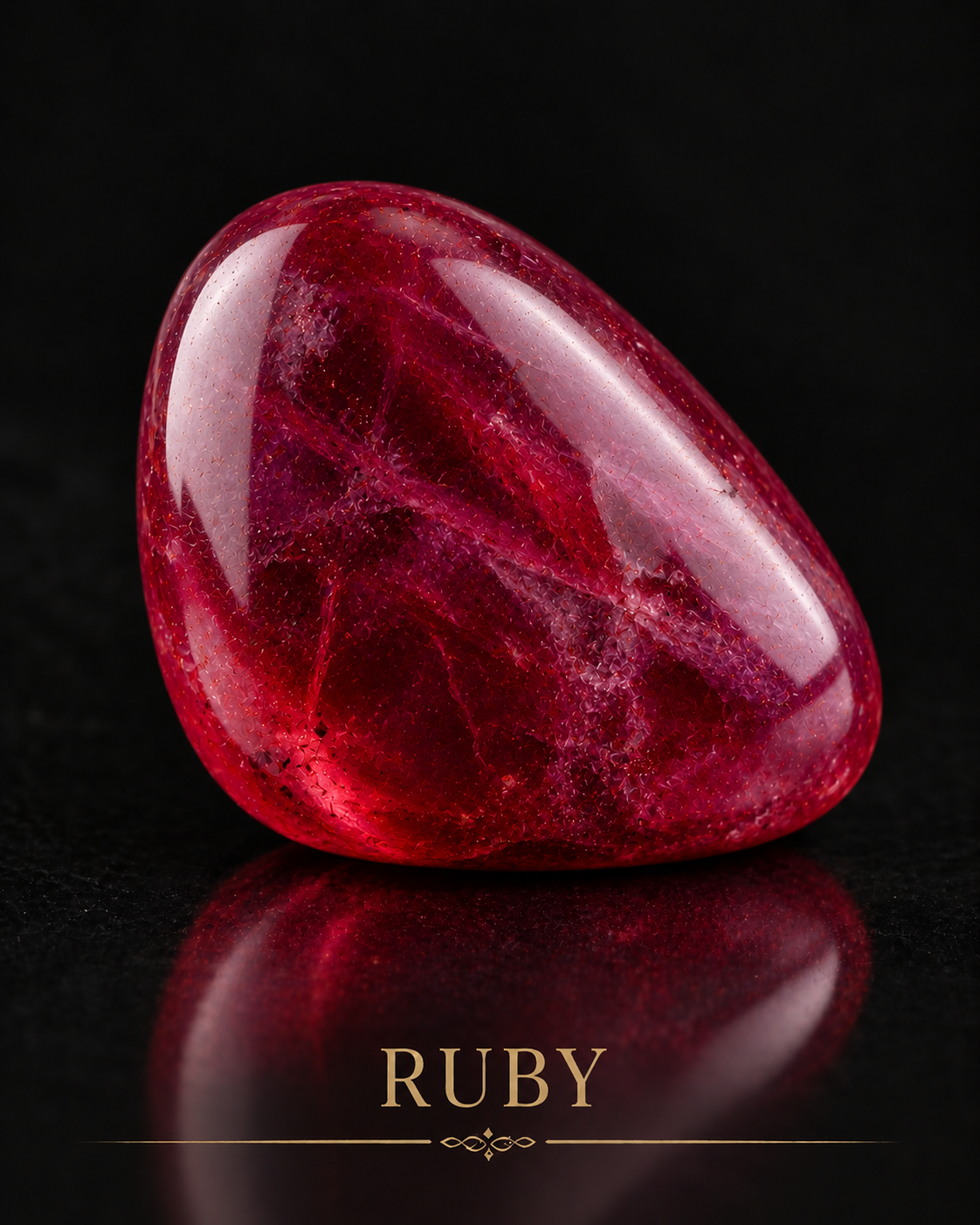
R · RUBY
Corundum colour, geological sources and Renaissance jewellery open a conversation about red, intimacy and memory.
View the image, read the article and explore four filmsSEVEN NEW EXPLORATIONS
Photographic studies of gemstone appearances, created digitally. Explore their origins and optical properties alongside my artistic response to each stone.
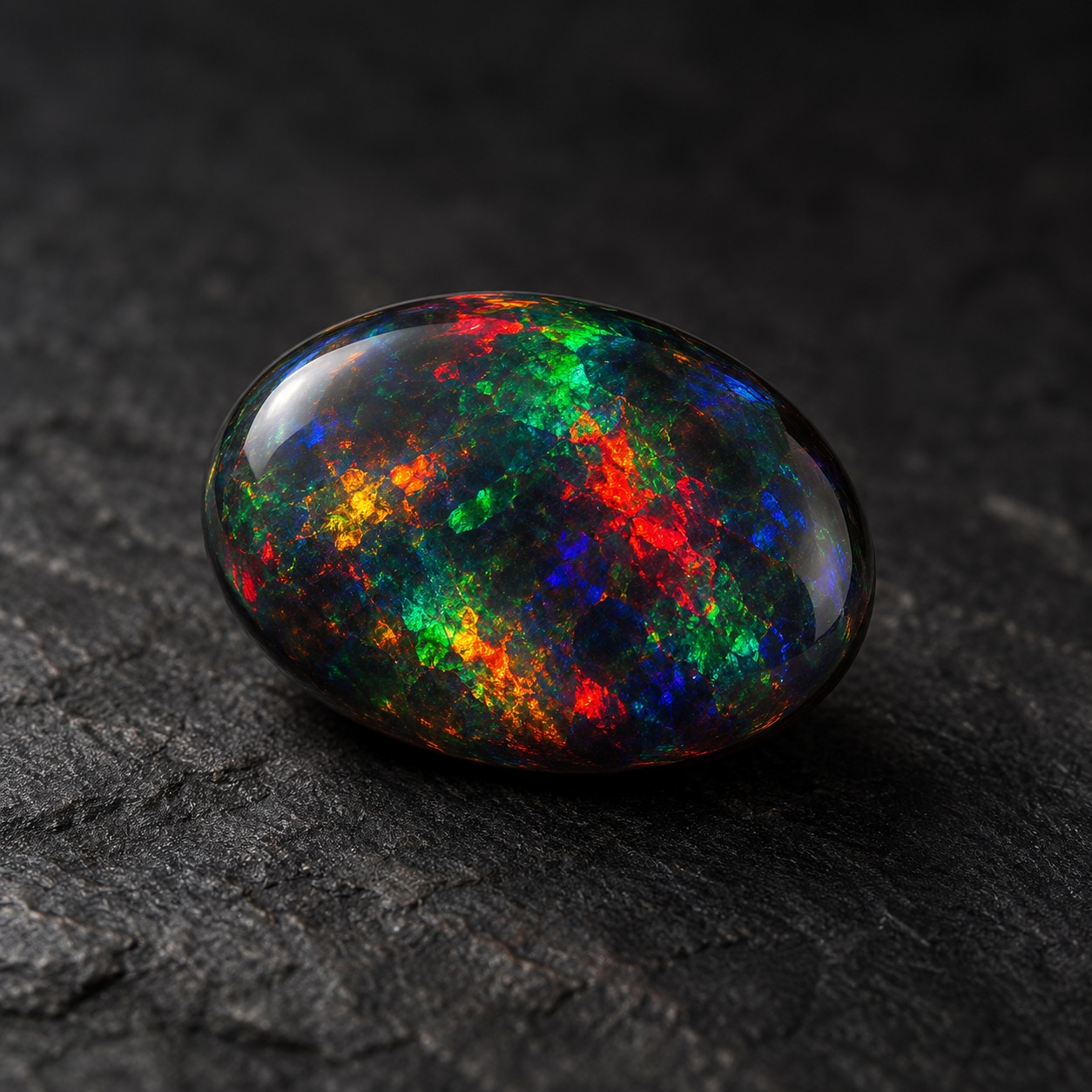
BLACK OPAL
Dark body colour and shifting spectral flashes bring depth, movement and surprise.
View the gemstone study and discover the material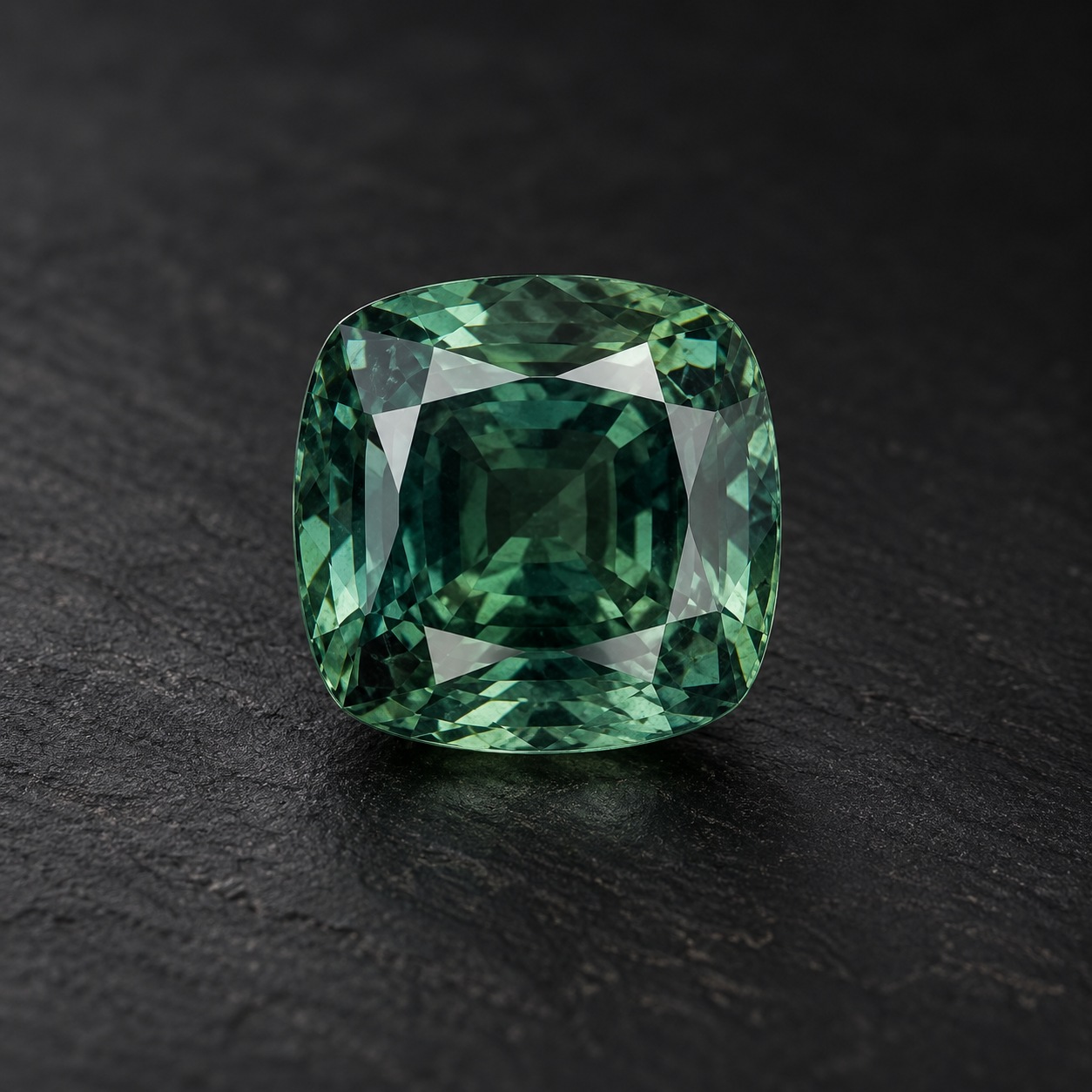
ALEXANDRITE
A rare colour-changing chrysoberyl opens a study of light, perception and transformation.
View the gemstone study and discover the material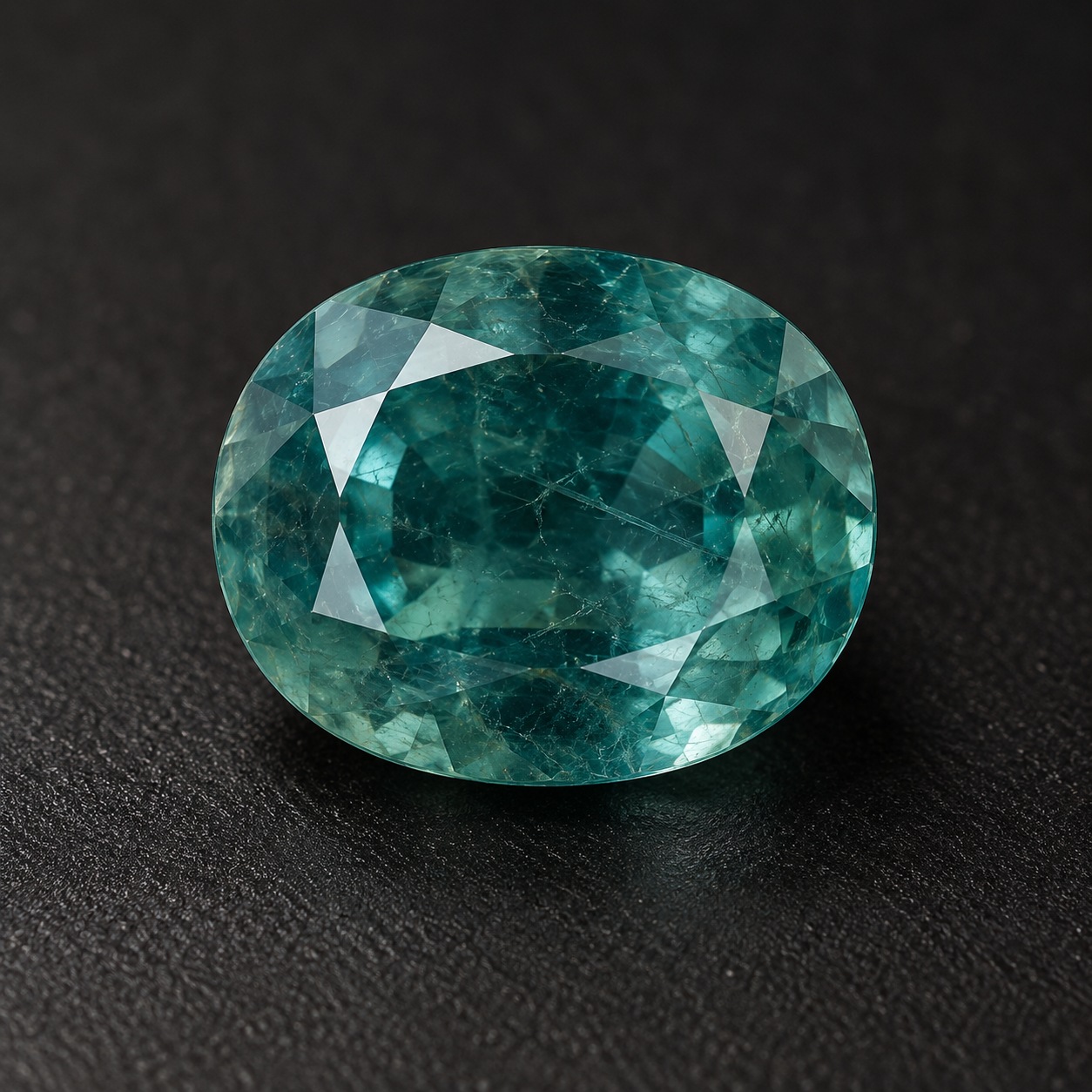
GRANDIDIERITE
A rare blue-green mineral invites close attention to colour, transparency and inner depth.
View the gemstone study and discover the material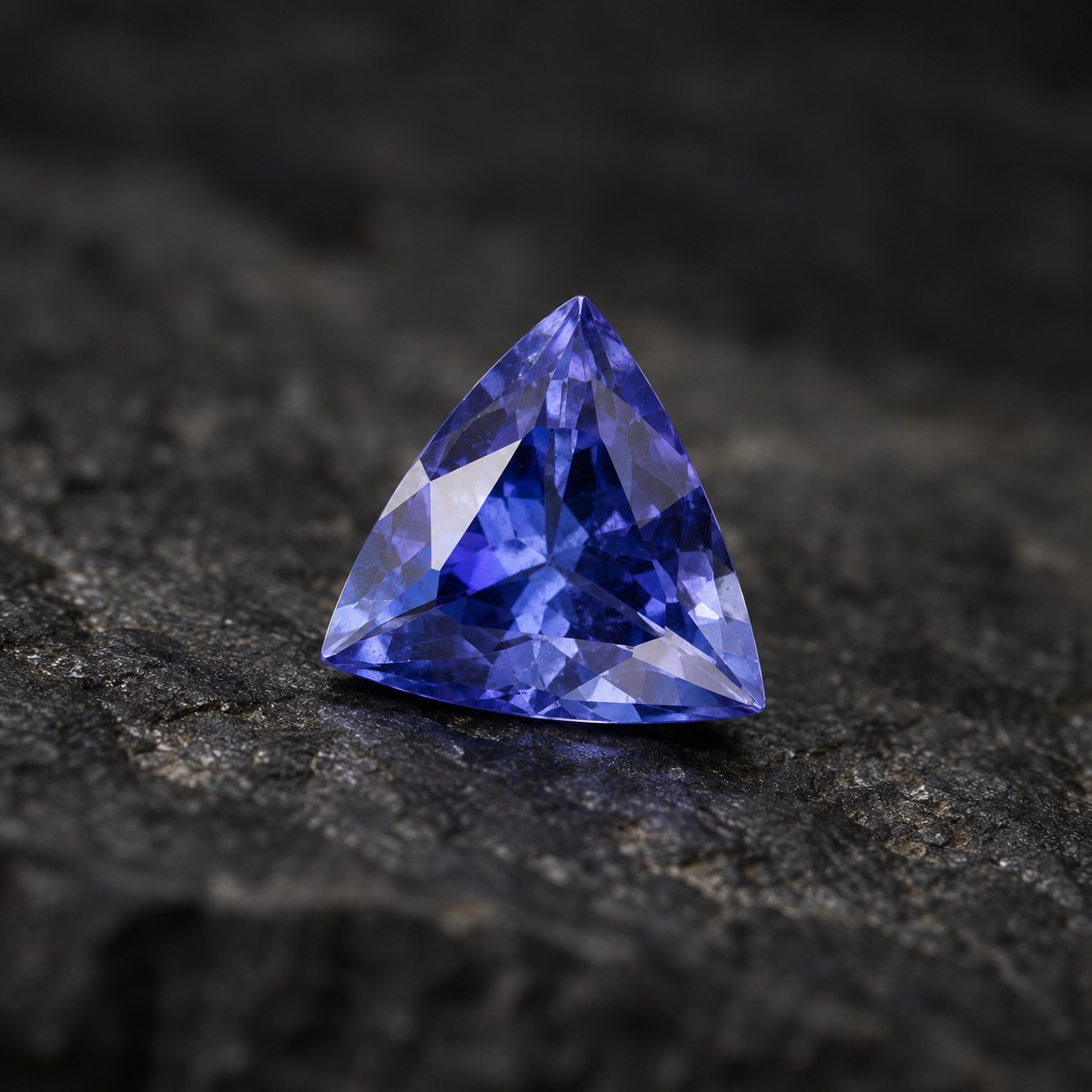
BENITOITE
Blue, violet and dispersed flashes of light give this rare gem a concentrated presence.
View the gemstone study and discover the material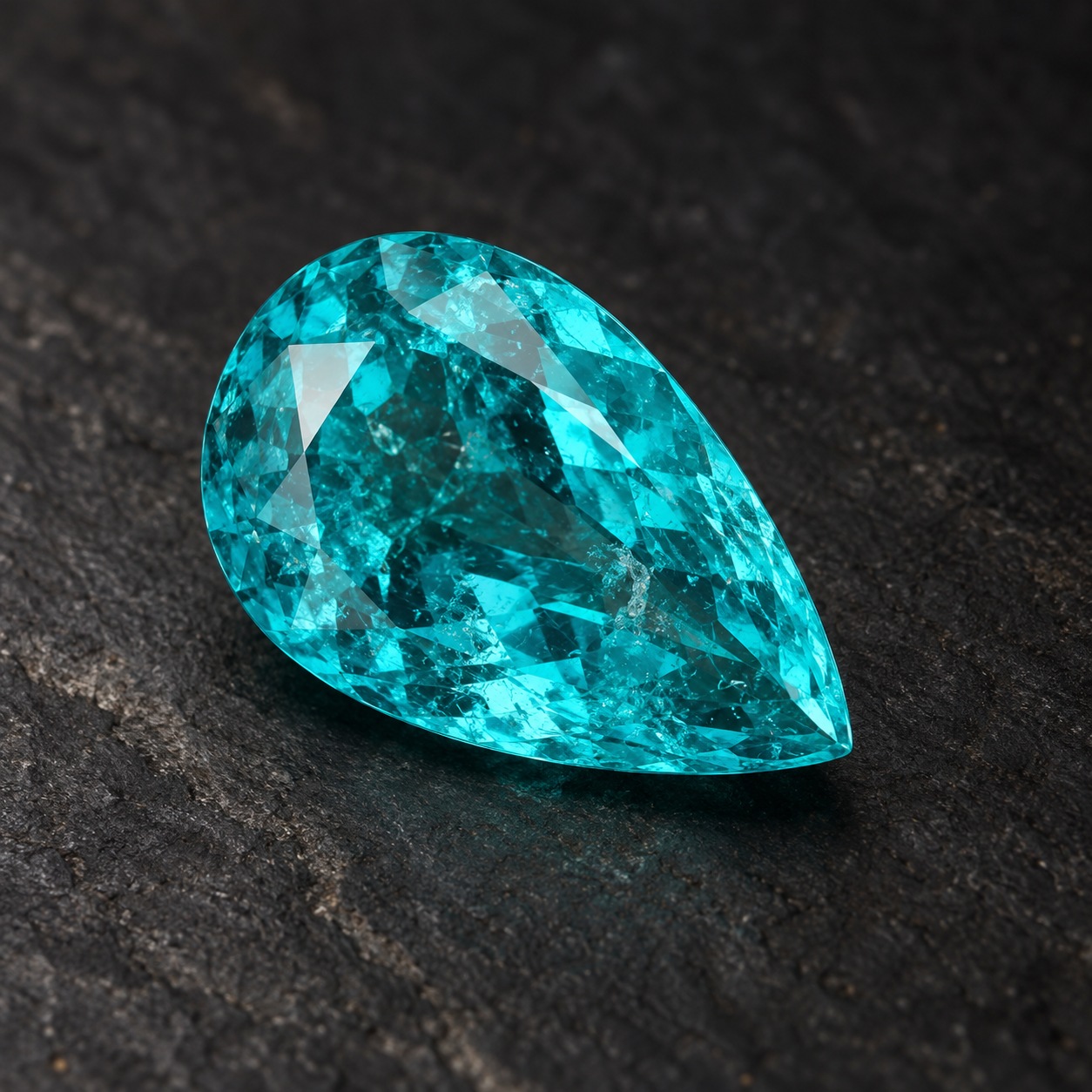
PARAÍBA TOURMALINE
Vivid copper-bearing blue invites an exploration of brightness held within a small form.
View the gemstone study and discover the material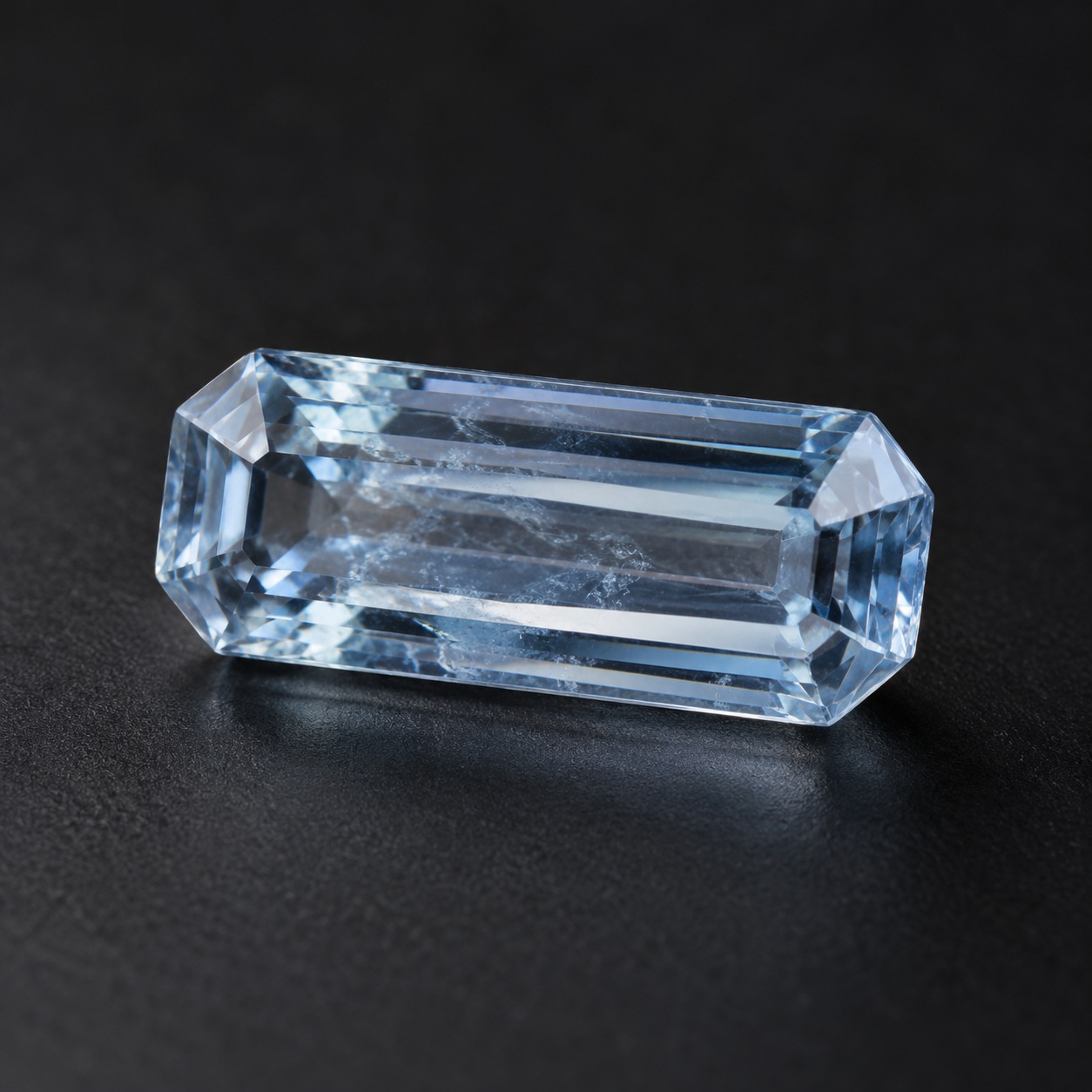
JEREMEJEVITE
A rare pale blue borate offers a gentler register of transparency and light.
View the gemstone study and discover the material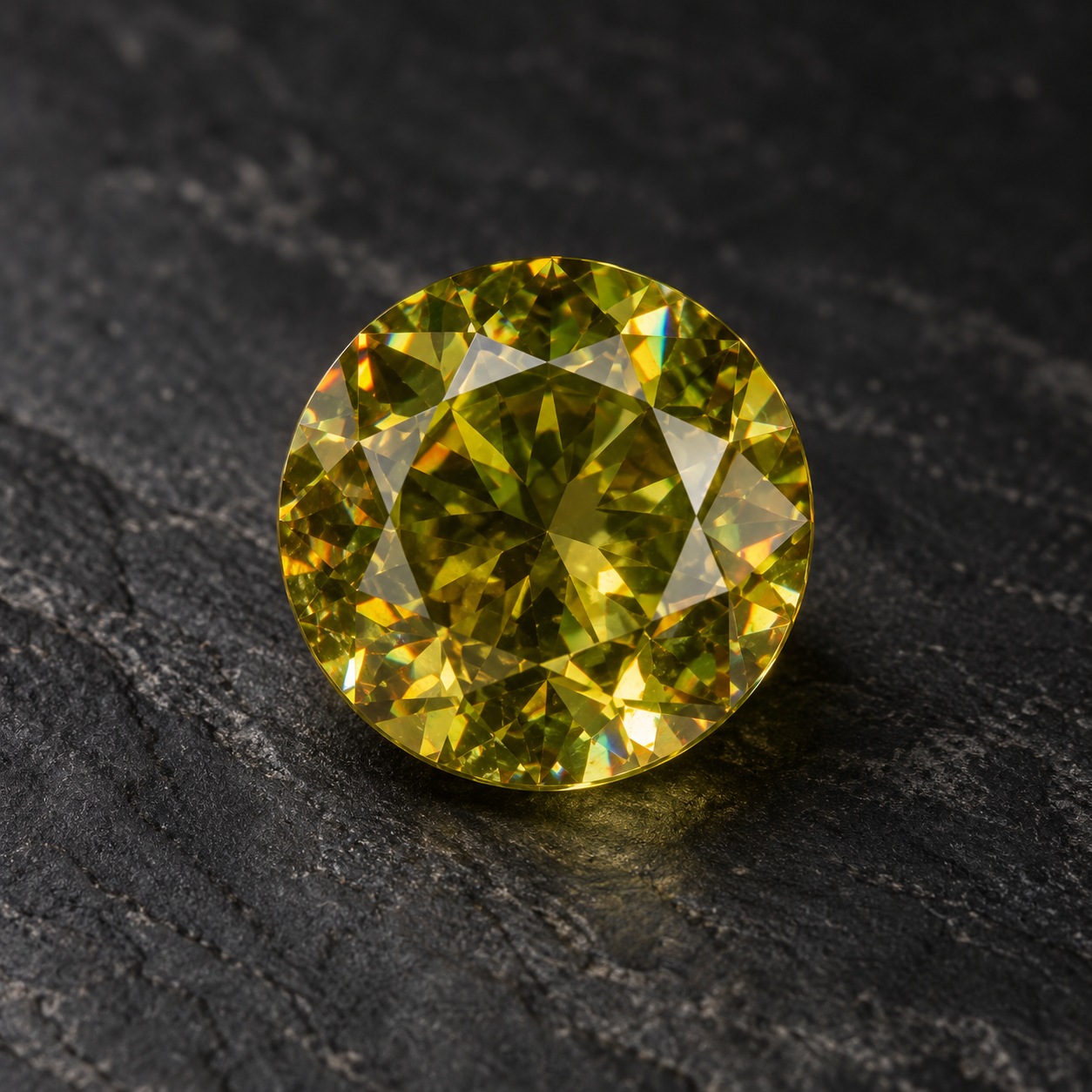
SPHENE · TITANITE
Golden green facets reveal the spectral fire of a light-sensitive mineral.
View the gemstone study and discover the materialCONTINUE EXPLORING
Four complementary perspectives on geology, place, craftsmanship and artistic heritage. Choose one to follow your curiosity, or watch them in order.
Geology & formation
Nick Zentner introduces the geological setting of Ellensburg blue agates. This regional lecture offers a substantial starting point for thinking about the processes behind a polished stone.
Watch on YouTubePlace & extraction history
Visit Idar-Oberstein, a historic mine and an international agate exhibition. This regional journey connects agate with its mining and collecting heritage rather than surveying worldwide extraction.
Watch on YouTubeShaping & polishing
A practical demonstration of shaping and polishing jasper/agate through successive abrasive stages. Watch how working a surface brings its pattern and reflected light into view.
Watch on YouTubeCraft heritage & carving
A specialist presentation about the Dreher family and gemstone carving, covering several materials. This longer lecture adds documented artistic heritage to the collection’s exploration of meaning.
Watch on YouTubeLonger selections offer deeper viewing. Titles, channels and durations were checked on 1 October 2026. Playback quality, captions and embedding availability have not been independently inspected; each film also has its original YouTube link.
CONTINUE EXPLORING
Begin with a general geology lesson, then follow amethyst into field collecting, faceting and an extended archaeological lecture.
Broader background · geology
An Earth Science teaching overview of minerals, identification and the principal rock types. This provides foundations for reading the formation discussion; it is not an amethyst-specific lecture.
Watch on YouTubeAmethyst · discovery & extraction
A collector’s field account of searching a new location and following amethyst pockets. It brings the physical work of finding crystals into view, rather than offering a worldwide mining survey or a scientific dating study.
Watch on YouTubeAmethyst · cutting & optical choices
A cutter demonstrates faceting an amethyst and introducing frosted surfaces. The contrast between clear and deliberately altered facets connects closely with the article’s interest in how a maker shapes light.
Watch on YouTubeAmethyst · documented cultural history
An Archaeological Institute of America lecture about acquiring amethyst in ancient Egypt’s Eastern Desert. This exceptional longer selection connects the material with archaeological evidence, expeditions and the human organisation behind royal jewellery.
Watch on YouTubeLonger selections offer deeper viewing. Titles, channels and durations were checked on 1 October 2026. Playback quality, captions and embedding availability have not been independently inspected; each film also has its original YouTube link.
CONTINUE EXPLORING
Follow ametrine from its Bolivian source towards two contrasting cutting approaches. The films document material, place and craft; they do not establish the Anahí legend as historical fact.
Ametrine · material & mine-to-market context
Robert Weldon’s GIA account connects the Bolivian source with the journey towards jewellery. At just under fifteen minutes, this specialist selection provides a focused introduction supported by the field report linked in the article.
Watch on YouTubeAmetrine · place & extraction
Travel through the Pantanal wetlands to the Anahí mine with mineral dealer Thomas Nagin. The episode follows mining and the transformation from rough material to gemstones. It is a filmed dealer’s journey, rather than independent certification of a particular specimen.
Watch on YouTubeAmetrine · creative faceting & colour placement
Michael Sackos works towards a hexagonal design intended to preserve the rough stone’s distinctive colour arrangement. This substantial demonstration makes the cutter’s compositional decisions central to the viewing experience.
Watch on YouTubeAmetrine · a second approach to shaping & polishing
A start-to-finish cushion-cut demonstration offers a comparison with the hexagonal design. Together, the two cutting films help visitors consider how different outlines and facets change the presentation of one material.
Watch on YouTubeLonger selections offer deeper viewing. Titles, channels and durations were checked on 1 October 2026. Playback quality, captions and embedding availability have not been independently inspected; each film also has its original YouTube link.
CONTINUE EXPLORING
Begin with geological foundations, visit a Brazilian mining region, follow an aquamarine cutting demonstration and explore the wider stories of a museum collection.
Broader background · geology & minerals
An Earth Science overview of minerals and rock types provides foundations for the article’s geological discussion. This is a general lesson, rather than an aquamarine-specific formation lecture.
Watch on YouTubeAquamarine · place & extraction
Thomas Nagin visits Minas Gerais, including a tourmaline mine and an aquamarine pocket being uncovered. The episode connects landscape, extraction and preparation for market; it covers several gem materials.
Watch on YouTubeAquamarine · shaping & polishing
Michael Sackos selects a cushion design and facets rough described by the maker as Madagascan aquamarine. Follow the design choices and working process; the upload is a practical maker’s account.
Watch on YouTubeBroader background · museum histories & interpretation
Jeffrey Post reflects on his Smithsonian career, collection displays and the stories around gems and minerals. This exceptional longer lecture extends the museum context of the article; it is not devoted solely to aquamarine or to sea-related lore.
Watch on YouTubeLonger selections offer deeper viewing. Titles, channels and durations were checked on 1 October 2026. Playback quality, captions and embedding availability have not been independently inspected; each film also has its original YouTube link.
CONTINUE EXPLORING
Start with geological foundations, then follow green aventurine through tumbling and compare wider cabochon and carving practices. Three background selections are labelled separately from the aventurine-specific demonstration.
Broader background · geology & rock types
An Earth Science overview introduces minerals and the principal rock types. It provides foundations for the quartzite discussion; it is not an aventurine-specific formation or mining film.
Watch on YouTubeGreen aventurine · tumbling & polishing
A start-to-finish account follows green aventurine through the maker’s working stages and shows the finished results. Selected for its practical process; the maker’s wider wellness branding is not evidence for medical or spiritual effects.
Watch on YouTubeBroader comparison · deliberate cabochon shaping
A practical demonstration of shaping and polishing an agate/jasper cabochon. This wider comparison helps distinguish a deliberately formed dome from the tumbling process shown in the aventurine film.
Watch on YouTubeBroader background · carving & artistic heritage
Patrick Dreher discusses gemstone carving and family craft heritage across several materials. The article links a documented Dreher sculpture incorporating aventurine quartz; this longer lecture is not devoted exclusively to aventurine.
Watch on YouTubeLonger selections offer deeper viewing. Titles, channels and durations were checked on 1 October 2026. Playback quality, captions and embedding availability have not been independently inspected; each film also has its original YouTube link.
CONTINUE EXPLORING
Begin with mineral foundations, compare two historic blues, explore binding media and look closely at Titian with a museum curator. The selections distinguish pigment practice from wider painting interpretation.
Broader foundations · rocks and minerals
A general Earth Science overview supplies foundations for thinking about mineral identity and geological context. It is not an azurite-specific lecture or a mine visit.
Watch on YouTubeExtended pigment study · two different mineral blues
Painter Michael Price discusses lapis and azurite as pigment materials. This substantial practitioner presentation directly supports comparison with the collection’s Lapis Lazuli study and the article’s interest in prepared colour.
Watch on YouTubePainter’s practice · pigments and binding media
Painter Michael Price discusses how binding media interact with pigments. This workshop perspective helps connect mineral colour with the preparation of paint; it covers several pigments rather than this stone alone.
Watch on YouTubeMuseum interpretation · the painting’s wider context
Curator Matthias Wivel explores Titian’s painting and its classical subject. Watch alongside the article’s documented azurite landscape passage; this is a discussion of the whole painting rather than a dedicated pigment-analysis lecture.
Watch on YouTubeLonger selections offer deeper viewing. Titles, channels and durations were checked on 1 October 2026. Playback quality, captions and embedding availability have not been independently inspected; each film also has its original YouTube link.
CONTINUE EXPLORING
Four substantial background films explore related chalcedony geology, lapidary heritage, cabochon polishing and gemstone carving. Each selection identifies its material and scope; these are complementary studies rather than four black-onyx-specific films.
Related chalcedony · geological foundations
Nick Zentner explains the geological setting of Ellensburg blue agates. This longer lecture concerns a related chalcedony material, rather than black onyx or its colour treatment.
Watch on YouTubeBroader regional context · agate and lapidary heritage
A visit to Idar-Oberstein connects a historic mine and agate exhibition with the region’s gemstone craft. This is wider context for chalcedony working, not evidence that the generated black stone comes from this location.
Watch on YouTubeComparative craft · cabochon shaping and polishing
A practical demonstration works jasper/agate through successive abrasive stages. It supports understanding of a rounded polished surface; it is not a black onyx treatment demonstration.
Watch on YouTubeExtended craft lecture · gemstone carving
Patrick Dreher discusses gemstone carving and family craft heritage across several materials. This longer lecture extends the article’s interest in material-led composition; it is not devoted to black onyx or to the museum cameos cited above.
Watch on YouTubeLonger selections offer deeper viewing. Titles, channels and durations were checked on 1 October 2026. Playback quality, captions and embedding availability have not been independently inspected; each film also has its original YouTube link.
CONTINUE EXPLORING
Explore the wider tourmaline family and a Californian gem region, watch quartz with black tourmaline inclusions being cut, then follow a longer museum lecture. The different materials and contexts are identified in each note.
Broader background · tourmaline family
A gemstone presenter introduces tourmaline’s name, sources, varieties and inclusions. This accessible overview concerns the wider family, particularly coloured gem tourmaline; the article’s scientific claims are supported separately by GIA sources.
Watch on YouTubeBroader background · place & extraction history
Thomas Nagin explores Southern California’s gem history, the Pala district and GIA. The episode discusses bluecap and pink tourmaline alongside other minerals; it documents a regional dealer’s journey, not the provenance of the pictured black stone.
Watch on YouTubeBlack tourmaline in quartz · cutting & polishing
A Portuguese-language lapidary demonstration works quartz containing black tourmaline inclusions. It offers a concrete view of shaping this composite material. The transparent quartz host makes this a comparison with the opaque polished stone in the reference, rather than a demonstration of polishing solid schorl.
Watch on YouTubeBroader background · museum histories & meaning
Smithsonian curator Jeffrey Post discusses mineral collections, displays and the stories associated with gems. This exceptional longer lecture provides a museum perspective on material interpretation; it is not a dedicated history of black tourmaline or evidence for spiritual protective claims.
Watch on YouTubeLonger selections offer deeper viewing. Titles, channels and durations were checked on 1 October 2026. Playback quality, captions and embedding availability have not been independently inspected; each film also has its original YouTube link.
CONTINUE EXPLORING
Begin with geological foundations, compare two bloodstone cabochon demonstrations, then explore a longer carving lecture. Wider context is clearly labelled; these films do not provide a bloodstone mining survey or a dedicated history of its religious uses.
Broader background · geology & mineral foundations
An Earth Science lesson introduces minerals, identification and rock types. This is wider background for the article’s quartz discussion; it is not a bloodstone-specific formation lecture or an extraction survey.
Watch on YouTubeBloodstone · shaping a rounded surface
A sustained practical demonstration concentrates on shaping a bloodstone cabochon’s dome with a coarse wheel. Selected for the working process named by the maker; it covers a shaping stage rather than a full geological explanation or finished polish.
Watch on YouTubeBloodstone · from slab to cabochon
A maker follows a slab labelled Blood Stone towards a finished cabochon, discussing its green and orange pattern. At slightly under fifteen minutes, this focused film complements the longer dome-shaping demonstration. The maker’s material identification has not been independently tested.
Watch on YouTubeBroader background · carving & craft heritage
Patrick Dreher discusses gemstone carving and family craft heritage across several materials. This exceptional longer lecture extends the article’s interest in material-led artistic decisions; it is not specifically about bloodstone, Christian iconography or the museum objects cited above.
Watch on YouTubeLonger selections offer deeper viewing. Titles, channels and durations were checked on 1 October 2026. Playback quality, captions and embedding availability have not been independently inspected; each film also has its original YouTube link.
CONTINUE EXPLORING
Begin with two demonstrations devoted to Blue Lace Agate, then explore the wider geology and craft of agate through two background lectures.
Blue Lace Agate · cutting & polishing
Follow a piece of Blue Lace Agate through trimming, shaping, grinding and polishing into a cabochon. This stone-specific demonstration connects the bands in the image with the decisions that reveal a finished surface.
Watch on YouTubeBlue Lace Agate · a longer practical study
A detailed account of tumbling Blue Lace Agate, organised through nine weekly stages. This longer selection offers sustained attention to surface transformation; it is a maker’s practical account, not a geological or medical authority.
Watch on YouTubeBroader background · blue agate geology
Nick Zentner’s lecture concerns Ellensburg blue agates in Washington State. It offers a useful geological comparison, but these are a different locality and variety from the Namibian Blue Lace Agate described in the article.
Watch on YouTubeBroader background · gemstone craft heritage
Patrick Dreher discusses family heritage and gemstone carving. This wider context supports the article’s interest in material-led artistic decisions; the lecture is not specifically about Blue Lace Agate.
Watch on YouTubeLonger selections offer deeper viewing. Titles, channels and durations were checked on 1 October 2026. Playback quality, captions and embedding availability have not been independently inspected; each film also has its original YouTube link.
CONTINUE EXPLORING
Start with mineral foundations, explore Khambhat’s bead craft, follow a carnelian tumbling journey and continue into a longer carving lecture. The wider lectures are labelled separately from the carnelian-related films.
Broader background · mineral & rock foundations
An Earth Science lesson introduces minerals, identification and rock types. This supplies foundations for the chalcedony discussion; it is not a carnelian-specific formation lecture.
Watch on YouTubeCarnelian & agate · place, bead craft & heritage
A regional craft film introduces Khambhat’s stone bead industry and stages including drying, heating and shaping. Its account concerns agate and carnelian within a living craft centre. The article’s historical discussion relies separately on archaeological research; the title’s continuity claim is not independently verified here.
Watch on YouTubeCarnelian · a sustained tumbling process
The maker describes a journey of more than four weeks tumbling carnelian. This practical account complements the shaped and reflective appearance of the reference; it does not establish the identity, treatment or origin of the pictured stone.
Watch on YouTubeBroader background · carving & artistic heritage
Patrick Dreher discusses gemstone carving and family craft heritage across several materials. This exceptional longer lecture supports the article’s interest in deliberate making; it is not a dedicated study of carnelian amulets, Roman intaglios or Khambhat.
Watch on YouTubeLonger selections offer deeper viewing. Titles, channels and durations were checked on 1 October 2026. Playback quality, captions and embedding availability have not been independently inspected; each film also has its original YouTube link.
CONTINUE EXPLORING
Begin with mineral foundations, visit the related Bolivian ametrine source, follow a citrine faceting demonstration and explore a longer museum lecture. Wider subjects and the limits of each selection are identified below.
Broader background · geology & mineral foundations
An Earth Science overview introduces minerals, identification and rock types. This gives foundations for the quartz discussion; it is not a citrine-specific formation or treatment lecture.
Watch on YouTubeRelated source · Anahí mine & Bolivian gem production
Thomas Nagin travels to Bolivia’s Anahí mine and follows material towards the gem trade. The episode’s main focus is ametrine; the article explains the mine’s relationship with natural citrine. It does not establish the source or treatment of the supplied reference.
Watch on YouTubeCitrine · deliberate faceting & polishing
Michael Sackos uses a triangular design for material described by the maker as Madeira citrine. The demonstration discusses dopping and faceting choices. This is a practical cutting account; the name and appearance do not independently establish untreated colour or geographical origin.
Watch on YouTubeBroader background · museum objects & interpretation
Smithsonian curator Jeffrey Post reflects on collections, displays and the stories around gems. This exceptional longer lecture adds museum context to the article’s discussion of the Jolie Citrine Necklace; it is not solely about citrine or a dedicated account of that necklace.
Watch on YouTubeLonger selections offer deeper viewing. Titles, channels and durations were checked on 1 October 2026. Playback quality, captions and embedding availability have not been independently inspected; each film also has its original YouTube link.
CONTINUE EXPLORING
Start with geological foundations, explore emerald sources in a dedicated lecture, explore gemstone carving and consider the cultural beliefs attached to jewellery. Three extended lectures support deeper viewing; the broader topics are identified in each note.
Geological foundations · emerald and aquamarine at 15:45
Geologist Rachel Phillips introduces gemstone formation, with emerald and aquamarine from 15:45. This comparative geology lesson places beryl within a wider mineral context.
Watch on YouTubeEmerald-specific extended lecture · mines and history
Wim Vertriest explores emerald deposits from ancient Egypt to Colombia, Afghanistan, Zambia and other sources. This longer lecture provides the main emerald-specific viewing selection and reflects the account presented in January 2021.
Watch on YouTubeBroader craft context · gemstone carving and artistic heritage
Patrick Dreher discusses gemstone carving and family craft heritage across several materials. This exceptional longer lecture extends the article’s discussion of material-led composition and carved surfaces; it is not a demonstration of the Mughal emerald or a lecture devoted to emerald.
Watch on YouTubeBroader cultural context · beliefs around jewels
Rose Tozer explores beliefs and symbolism attached to gems and jewellery. This longer cultural lecture complements the article’s distinction between historical beliefs and contemporary artistic readings; it is not a dedicated history of the pendant or brooch discussed above.
Watch on YouTubeLonger selections offer deeper viewing. Titles, channels and durations were checked on 1 October 2026. Playback quality, captions and embedding availability have not been independently inspected; each film also has its original YouTube link.
CONTINUE EXPLORING
Start with mineral identification, explore a longer lecture on Soudan’s hematite ore, follow a jasper-and-hematite polishing process and continue into a museum talk on ancient seals. Composite materials and wider cultural subjects are identified in each note.
Hematite & related minerals · identification
Geology professor Shawn Willsey introduces hematite alongside magnetite, galena and pyrite. This lesson gives mineral-identification context; the next lecture addresses the geological development of a particular hematite ore deposit.
Watch on YouTubeHematite · a documented deposit & mining history
University of Minnesota researcher Zsuzsanna Allerton discusses the historic Soudan mine and research into the formation and later history of its hematite ore. This exceptional longer research lecture supplies a specific geographical and geological context; it is not a filming tour of present-day extraction or the provenance of the supplied stone.
Watch on YouTubeJasper with hematite · shaping & polishing
Will Ohlund follows material described as jasper with hematite on its upper surface through preparation, successive grinding stages and final polish. This practical demonstration concerns a composite rock; it should be compared with, rather than treated as proof of the making process for, the pictured Hematite reference.
Watch on YouTubeBroader cultural context · cylinder seals & their imagery
Curator Sidney Babcock introduces the Morgan’s ancient Mesopotamian seal collection and its significance in history and art. This longer museum talk extends the article’s discussion of a documented hematite seal at the Met; it covers seals in several materials and is not a lecture devoted exclusively to hematite.
Watch on YouTubeLonger selections offer deeper viewing. Titles, channels and durations were checked on 1 October 2026. Playback quality, captions and embedding availability have not been independently inspected; each film also has its original YouTube link.
CONTINUE EXPLORING
Four perspectives on formation, pigment production, polishing and museum craft. The geology lesson and extended documentary support sustained viewing; two shorter demonstrations are included for their direct relevance and labelled clearly.
Geological foundations · lapis section at 26:03
Geologist Rachel Phillips places lapis within a wider lesson about gemstone formation. Lapis begins at 26:03; this is a comparative geology lesson rather than an Afghan mine visit.
Watch on YouTubeExtended documentary · lapis and pigment production
The opening portion follows lapis and natural ultramarine; the full documentary examines several costly colours and materials. Choose the opening lapis sequence for a focused view, or continue for wider production context. This is a published film, not a verification of present-day mine conditions.
Watch on YouTubeLapis-specific craft · shaping and polishing
A practical lapidary film follows lapis from a rough piece towards a polished surface. Shorter than the preferred 15–45-minute range, it is included for its direct connection to the stone represented in the image.
Watch on YouTubeShort museum demonstration · mineral pigments
Anita Chowdry demonstrates traditional pigment preparation using lapis lazuli and malachite. This shorter museum film adds a specific South Asian workshop perspective to the article’s Renaissance connection; it is not a Renaissance reconstruction or an ancient Egyptian process.
Watch on YouTubeLonger selections offer deeper viewing. Titles, channels and durations were checked on 1 October 2026. Playback quality, captions and embedding availability have not been independently inspected; each film also has its original YouTube link.
CONTINUE EXPLORING
Explore mineral foundations, follow a malachite-bearing composite through polishing, then consider paint preparation and Renaissance practice. Broader subjects and composite materials are identified below.
Broader foundations · rocks and minerals
A general Earth Science lesson introduces mineral identification and rock types. It supplies background for the article’s material enquiry; it is not a malachite mine survey or a dedicated copper-carbonate lesson.
Watch on YouTubeMalachite-bearing composite · cabochon shaping
Sean Eckel shapes and polishes material he identifies as chrysocolla, malachite and gem silica. The sustained demonstration makes the shaping process visible; its composite material differs from a pure malachite stone.
Watch on YouTubePainter’s practice · pigments and binding media
Painter Michael Price discusses how binding media interact with pigments. This workshop perspective helps connect mineral colour with the preparation of paint; it covers several pigments rather than this stone alone.
Watch on YouTubeExtended artist lecture · Renaissance materials and composition
Michael Price introduces his research into mineral colour, historical painting supports and compositional planning. This longer practitioner lecture offers a perspective to compare with museum technical research; it is not a film devoted solely to malachite or Egyptian cosmetics.
Watch on YouTubeLonger selections offer deeper viewing. Titles, channels and durations were checked on 1 October 2026. Playback quality, captions and embedding availability have not been independently inspected; each film also has its original YouTube link.
CONTINUE EXPLORING
Explore geological foundations, compare two peridot faceting demonstrations and continue into an extended gemstone-carving lecture. These films complement the article; they do not document Zabargad mining or authenticate the generated image.
Geological foundations · peridot among twelve examples
Geologist Rachel Phillips explains several gemstone-forming processes, including peridot. This comparative lesson supplies geological foundations rather than a visit to Zabargad.
Watch on YouTubePeridot-specific craft · trillion faceting
A step-by-step demonstration follows peridot from rough material to a faceted trillion-cut gem on a Facetstar machine. The faceted result provides a comparison with the generated cabochon.
Watch on YouTubePeridot-specific craft · a second faceting study
Another peridot faceting demonstration offers a second view of the maker’s work. At nine seconds under fifteen minutes, this focused selection complements the longer cutting film; the uploader identifies the material.
Watch on YouTubeExtended craft context · carving and artistic inheritance
Patrick Dreher discusses gemstone carving across several materials and generations of family craft. This broader lecture supports the article’s interest in inherited making; it is not devoted to peridot or its Egyptian source.
Watch on YouTubeLonger selections offer deeper viewing. Titles, channels and durations were checked on 1 October 2026. Playback quality, captions and embedding availability have not been independently inspected; each film also has its original YouTube link.
CONTINUE EXPLORING
Begin with geological foundations, compare two jasper-related polishing demonstrations and explore a longer carving lecture. Related and composite materials are identified in each note.
Broader foundations · rocks and minerals
An Earth Science overview explains mineral identification and the main rock types. This supplies context for fine-grained silica; it is not a dedicated red jasper formation lecture.
Watch on YouTubeJasper and agate · cabochon shaping
A sustained demonstration follows jasper/agate through shaping and successive abrasive stages. It supports the article’s enquiry into worked surfaces; it does not identify the generated red stone.
Watch on YouTubeComposite material · jasper with hematite
Will Ohlund works material described as jasper with hematite on its upper surface. The film shows preparation, grinding and polishing of a composite piece, rather than a uniform red jasper specimen.
Watch on YouTubeExtended craft context · gemstone carving
Patrick Dreher discusses carving and family craft heritage across several materials. This background lecture complements the Medici vessel discussion; it does not reconstruct the vase or explain Egyptian amulet meanings.
Watch on YouTubeLonger selections offer deeper viewing. Titles, channels and durations were checked on 1 October 2026. Playback quality, captions and embedding availability have not been independently inspected; each film also has its original YouTube link.
CONTINUE EXPLORING
Begin with geological foundations, follow a Mozambican ruby through cutting and polishing, explore ruby treatments, then consider the wider cultural histories of jewellery. The two extended lectures reward sustained viewing; broader subjects are clearly labelled.
Geological foundations · ruby and sapphire at 9:51
Geologist Rachel Phillips introduces gemstone formation and discusses ruby and sapphire from 9:51. This comparative lesson supplies geological context rather than a film devoted exclusively to ruby.
Watch on YouTubeMozambican ruby · auction, cutting and polishing
Follow a ruby journey from a Gemfields auction in Singapore into cutting and polishing in Sri Lanka and Thailand. This trade-produced documentary offers a substantial view of the material’s transformation; it is not an independent assessment of present-day mining conditions.
Watch on YouTubeExtended ruby-specific lecture · treatments and identification
Wim Vertriest explains ruby treatments and their identification in a specialist GIA lecture. The longer format supports deeper viewing and helps distinguish natural material, changes to appearance and what a photograph cannot establish.
Watch on YouTubeBroader cultural history · jewellery, beliefs and symbols
Research librarian Rose Tozer explores beliefs surrounding gems and jewellery, including mourning jewellery and amulets. This wider lecture complements the article’s museum examples; it is not devoted solely to ruby, and historical beliefs are not scientific endorsements.
Watch on YouTubeLonger selections offer deeper viewing. Titles, channels and durations were checked on 1 October 2026. Playback quality, captions and embedding availability have not been independently inspected; each film also has its original YouTube link.