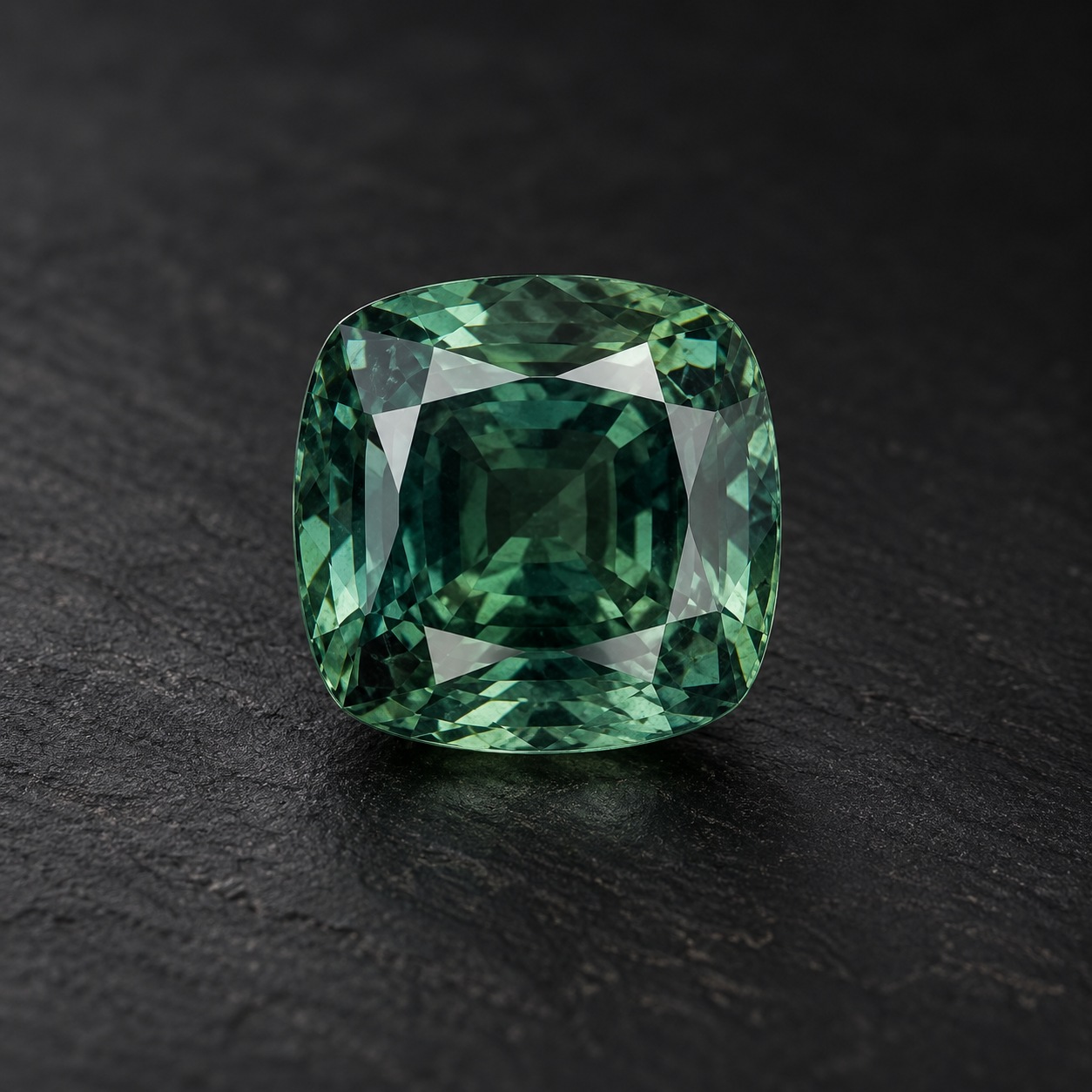
Alexandrite interests me because it refuses to give a single answer to the question of colour. Under one light it can appear green; under another, purplish red. I am drawn to that relationship between an object and the conditions through which we see it.
The material and its origins
Alexandrite is the rare colour-change variety of chrysoberyl. Fine examples appear green to bluish green in daylight and red to purplish red in incandescent light. The strength of the change varies. First discovered in Russia’s Ural Mountains in the 1830s, it also occurs in Brazil, Sri Lanka and East Africa. Fine material is exceptionally rare.
| Material | Chrysoberyl |
|---|---|
| Mohs hardness | 8.5 |
| Optical character | Colour change under different light sources |
What it brings to my work
I see a language of becoming here: a reminder that identity can hold more than one register. The image explores its daylight character. One still image cannot demonstrate the full colour change of an actual specimen; that requires observing the same stone under different illumination.