ARTICLE TEN · AUTHORSHIP AND RESPONSIBILITY
Authorship After the Prompt
Why artistic authorship in an AI-assisted studio resides in intention, historical knowledge, judgement, rejection, reconstruction and responsibility—not in the instant production of an image.
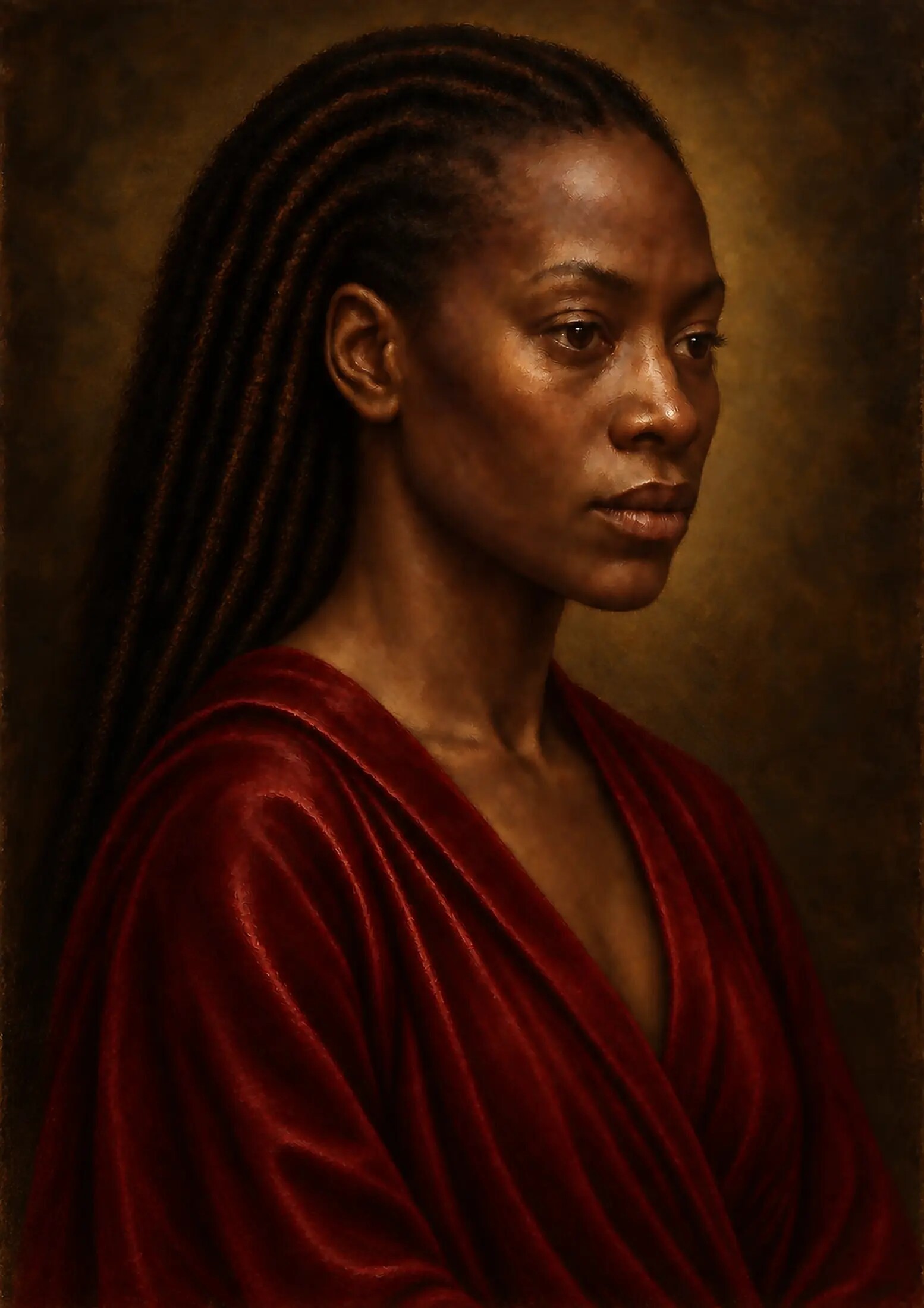
A prompt can begin an image.
It cannot decide what the image should mean.
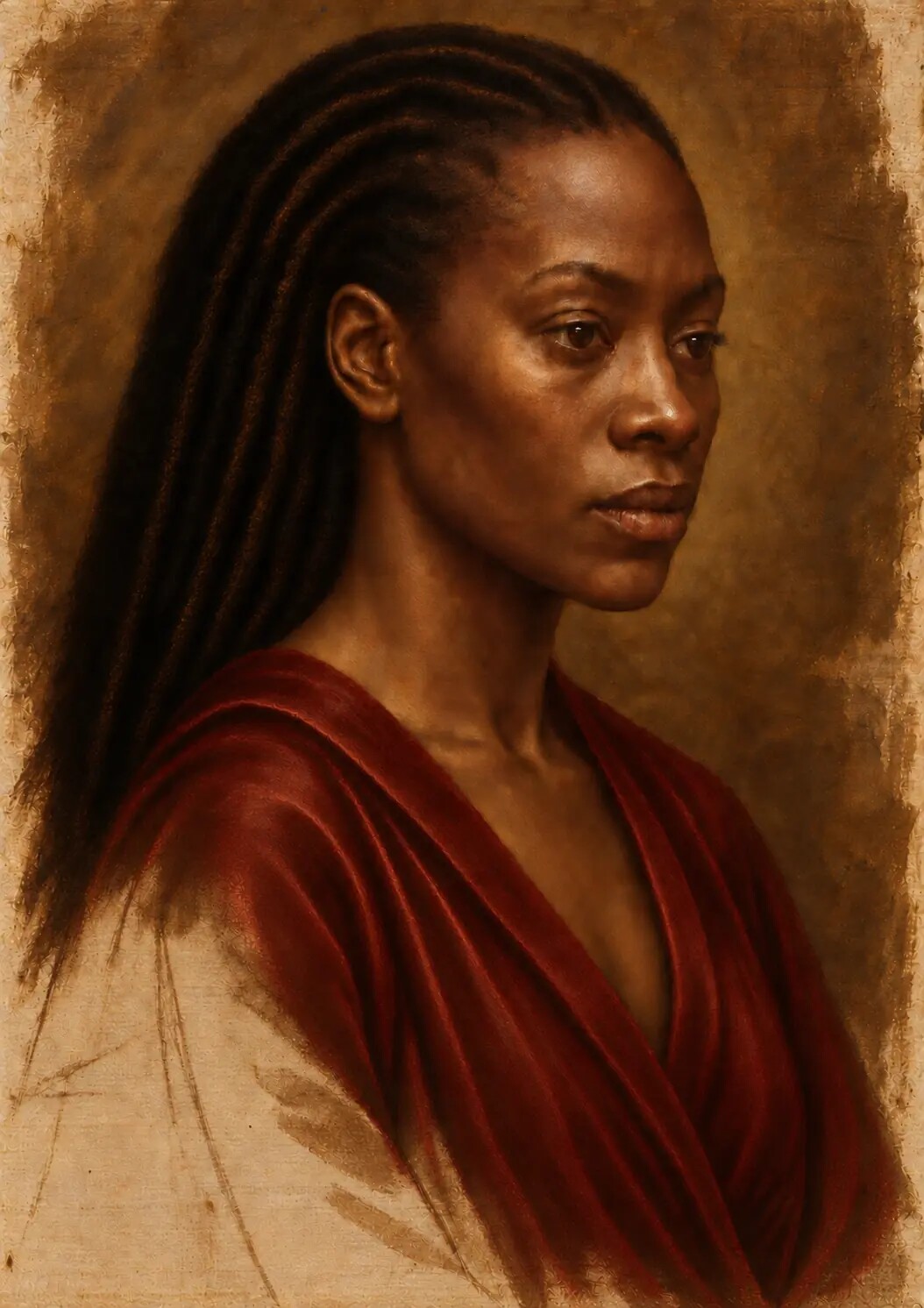
It cannot determine why a Black woman should occupy the visual language of Renaissance authority, how her presence should be constructed, which historical traditions should be questioned or inherited, where the light should fall, which details should command attention or when the work has reached its final form.
A prompt can describe a possibility. It can initiate a visual proposition. It can produce something surprising, technically accomplished or immediately seductive.
But the appearance of an image is not the same as the completion of an artwork.
In this final article accompanying Painting Without Wet Paint, I examine the question that surrounds almost every serious discussion of AI-assisted art:
Who is the author?
The answer cannot be found by counting how many words were typed or how many minutes passed before an image appeared. It must be found in the complete creative system: conception, research, cultural position, historical knowledge, direction, selection, rejection, correction, integration, material translation and accountability.
The Renaissance-inspired portrait at the centre of this study did not become an artwork at the moment of generation. It became an artwork through an extended sequence of decisions: the choice of subject, the construction of authority, the study of historical painting, the rebuilding of anatomy, the correction of light, the control of surface, the removal of false detail, the preparation of the print and the responsibility taken for the final image.
Authorship did not occur before or after the tool.
It existed throughout the process.
The Myth of the Instant Image
Generative systems have encouraged a powerful myth: that an image appears instantly and therefore has no meaningful process.
The speed of first production is real. A visual proposal can arrive in seconds. What that speed conceals is the distance between a plausible image and a resolved artwork. The first result may contain attractive colour, convincing atmosphere and a recognisable subject, while still failing anatomically, culturally, materially and psychologically.
An instant image can be an opening, but speed does not remove the need for judgement. It concentrates judgement. When possibilities multiply quickly, the artist must become more exact about what is worth keeping, what must be refused and what the work is actually trying to say.
Before the Prompt Came the Intention
The creative process began before any instruction was entered.
It began with questions about portraiture, historical authority, Black presence, cultural inheritance and the possibility of reconstructing the visual intelligence of oil painting within a digital studio. It began with a decision that the figure would not function as decoration, costume or historical pastiche. She would occupy the centre of the image with gravity and self-possession.
That intention shaped every later decision. Without it, the prompt would have been a request for appearance. With it, the prompt became one instrument inside a larger enquiry.
A Prompt Is Not a Neutral Command
Every prompt contains assumptions.
The words used to describe beauty, age, dignity, refinement, historical period, race, gender and authority carry inherited visual conventions. A system trained upon existing images does not receive those words without context. It translates them through patterns already present in its training material.
The artist therefore has to read the result critically. Which conventions has the system repeated? Which bodies has it idealised or distorted? What does it assume Renaissance authority looks like? Does it treat Blackness as integral to the person or as a surface category added to an unchanged European template?
Prompting is not only description. It is negotiation with a visual archive.
The Image as a Proposal
The generated image was treated as a proposal rather than a conclusion.
A proposal can contain valuable possibilities without being accepted as a whole. One version may offer the correct turn of the head but an empty gaze. Another may carry the right atmosphere but flatten the skin. A third may resolve the garment while losing the psychological reserve of the sitter.
The artist’s work lies partly in recognising where the image knows something and where it is merely fluent. Fluency can create confidence without coherence. A proposal becomes useful when its qualities can be named, tested and placed in relation to the intended work.
Rejection Is Part of the Work
What is discarded belongs to the history of the artwork.
Rejected images show the boundaries of intention. A version may be technically impressive and still be wrong because it sentimentalises the sitter, imitates historical painting too literally, exaggerates age, smooths the face into artificial perfection or turns cultural identity into a visual effect.
Selection alone is not authorship if every attractive result is treated as interchangeable. Rejection becomes meaningful when it is guided by criteria. Each refusal clarifies what the artwork will not become.
The archive of discarded possibilities is therefore not wasted production. It is evidence of judgement.
The Difference Between Taste and Criteria
Taste says that one image is preferred.
Criteria explain why.
For this portrait, the criteria included anatomical plausibility, coherence of light, psychological ambiguity, cultural dignity, believable material behaviour, restrained surface detail and the ability to survive enlargement and print. These were not preferences added after generation. They governed the entire process.
Criteria allow correction to become precise. Instead of asking whether a face feels more realistic, the artist can ask whether the eyelid wraps around the eye, whether the mouth turns with the skull, whether the far cheek recedes and whether the highlight agrees with the established illumination.
Historical Research as Creative Labour
The portrait’s historical atmosphere did not come from requesting a Renaissance style.
It depended upon studying how historical paintings organise light, drawing, ground, underpainting, opacity, transparency, edges and surface. It required attention to the difference between a visual cliché of age and the accumulated material logic of a painting.
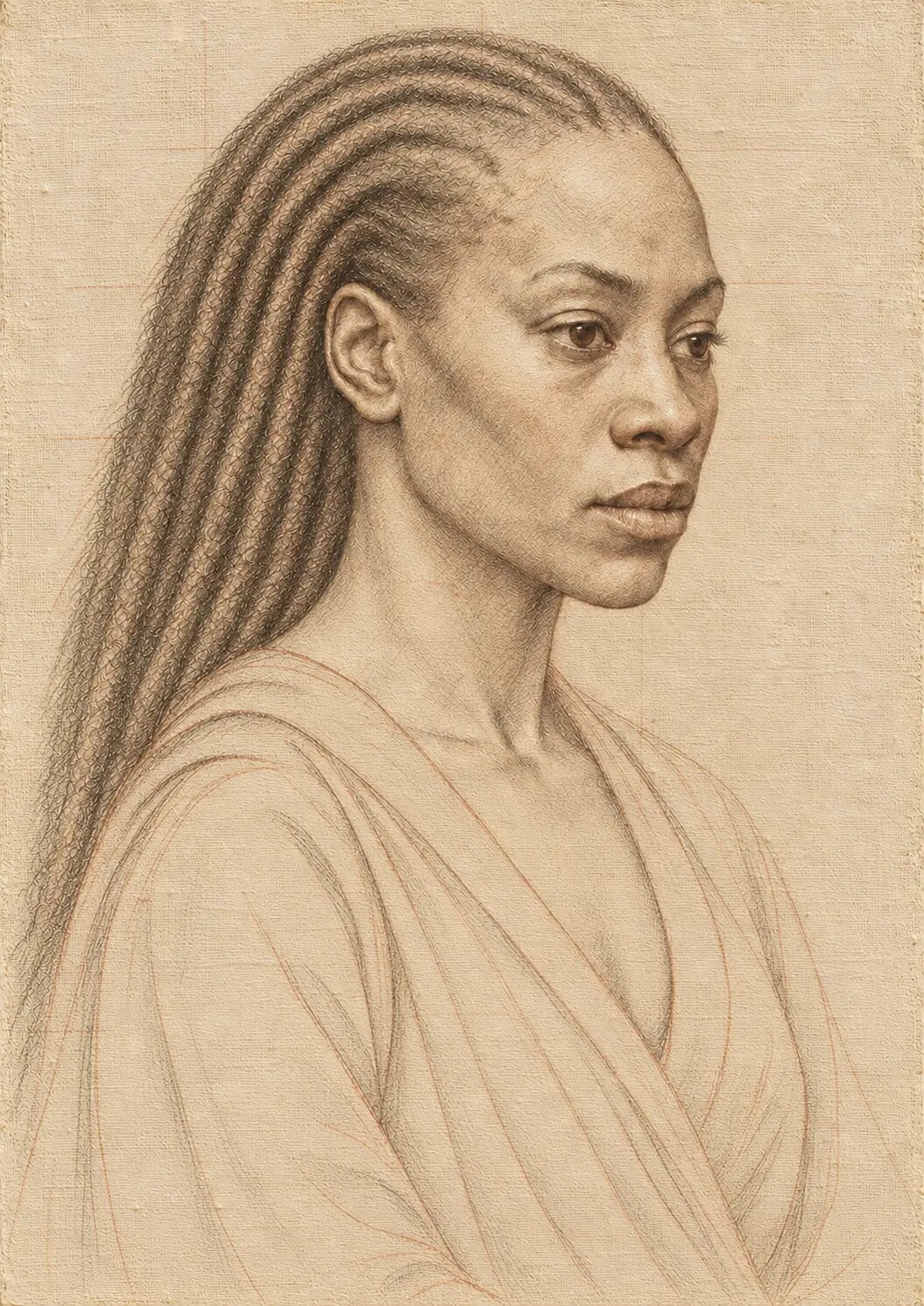
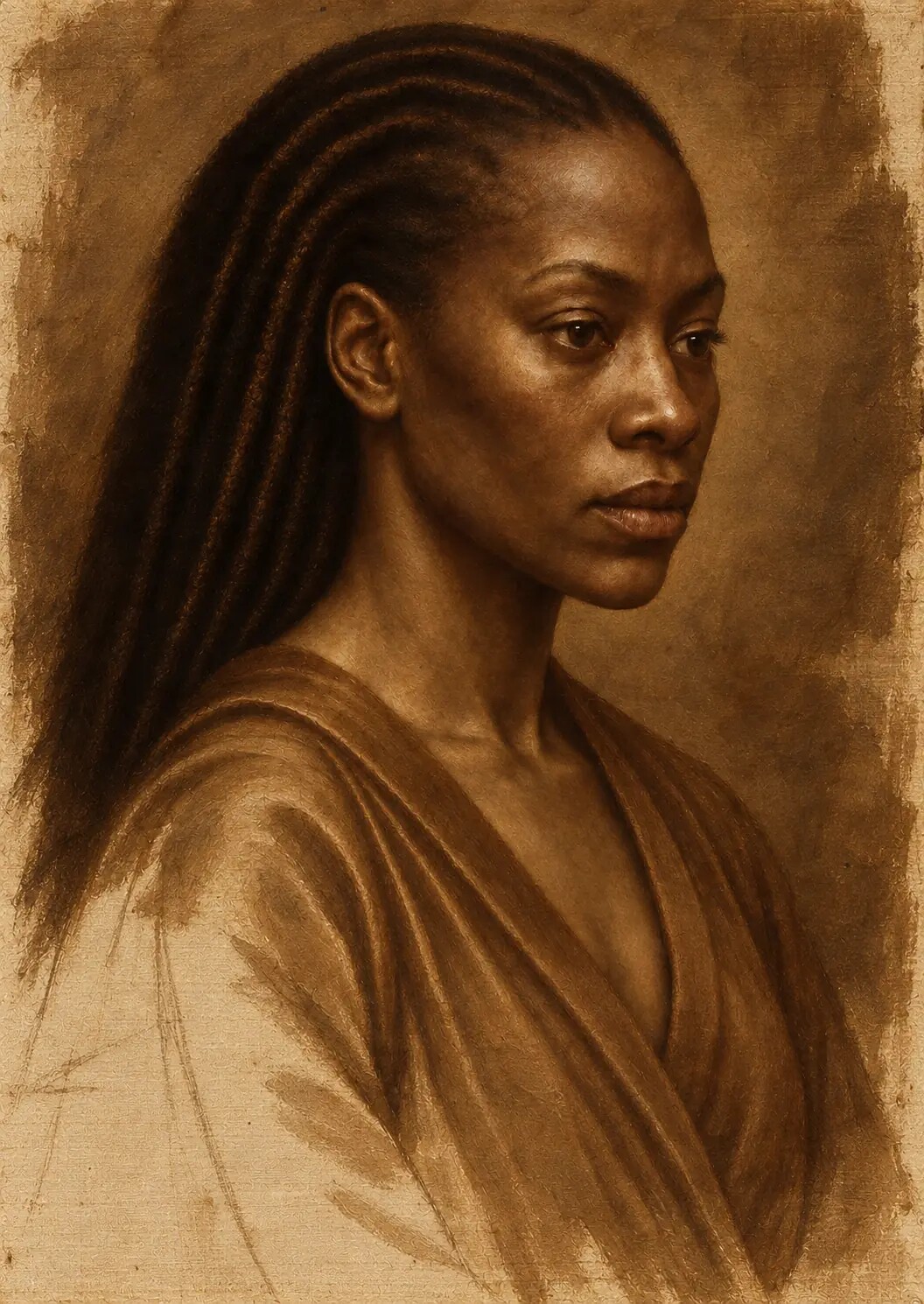
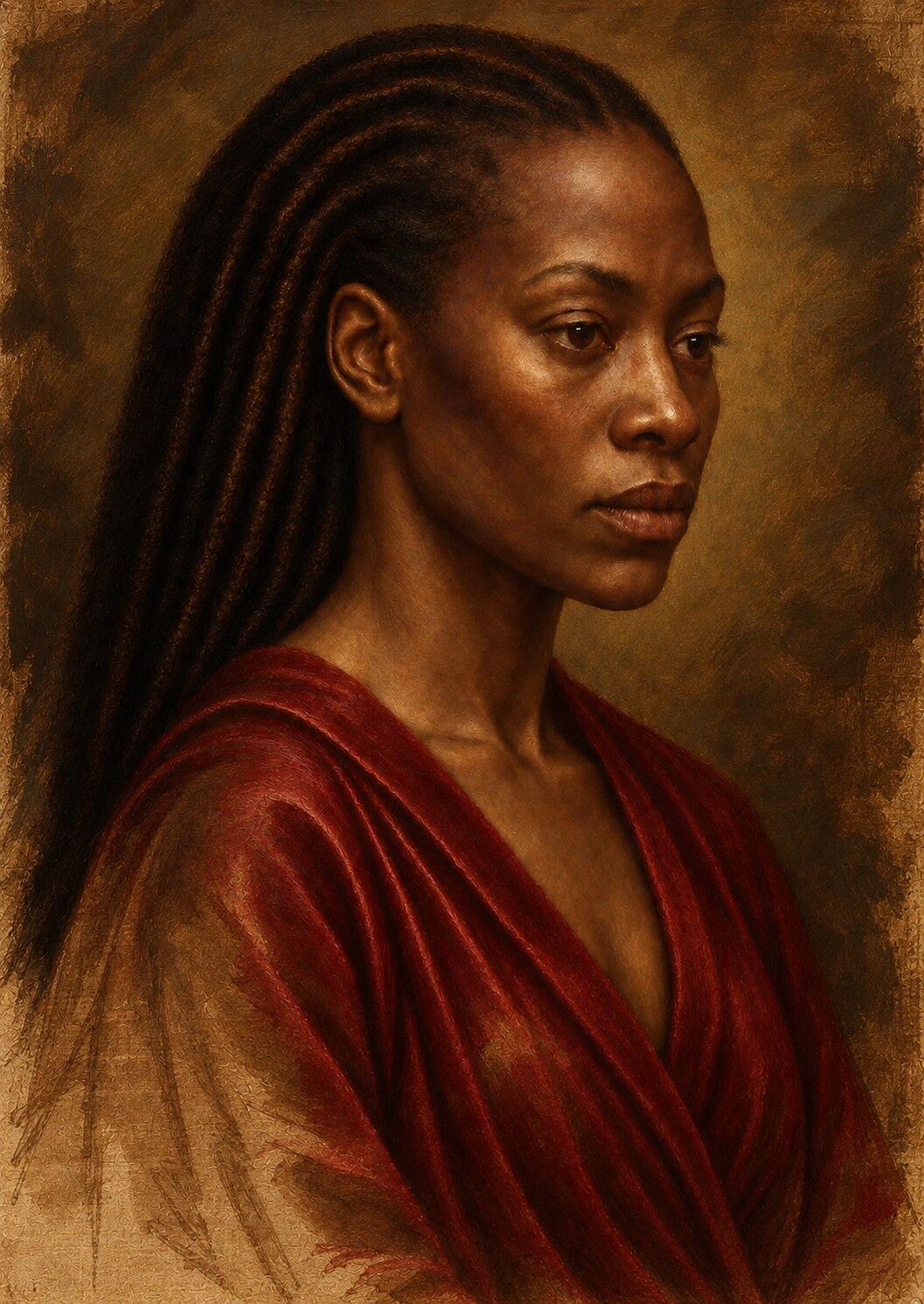
Research shaped the reconstruction of the image. Grisaille and verdaccio informed the tonal architecture. Glazing informed the deepening of colour. Scumbling informed the return of broken light. Pentimenti informed the understanding of revision. Historical knowledge did not supply a costume; it supplied a method of seeing.
The Renaissance Workshop Was Already Collaborative
The idea of the solitary master producing every part of an artwork without assistance is historically incomplete.
Renaissance and early modern workshops involved apprentices, assistants, specialists, patrons, material suppliers and inherited studio knowledge. The master’s authorship could include conception, design, supervision, correction and final approval alongside varying degrees of manual contribution from others.
This history does not make artificial intelligence equivalent to a human workshop assistant. A computational system has no biography, intention or responsibility. But the workshop model reminds us that authorship has never depended only upon one hand touching every part of an object.
Direction Is Not the Same as Delegation
Direction requires more than asking another agent to complete a task.
It requires the director to hold the purpose of the whole work, establish its criteria, evaluate what returns, identify failures and remain responsible for the final result. Delegation without judgement transfers labour. Direction organises labour into meaning.
In an AI-assisted studio, the distinction is decisive. A system can offer variations. It cannot know which variation belongs to the work unless the artist has already established the terms by which belonging will be judged.
Reconstruction, Not Merely Generation
The portrait was repeatedly reconstructed after its initial appearance.
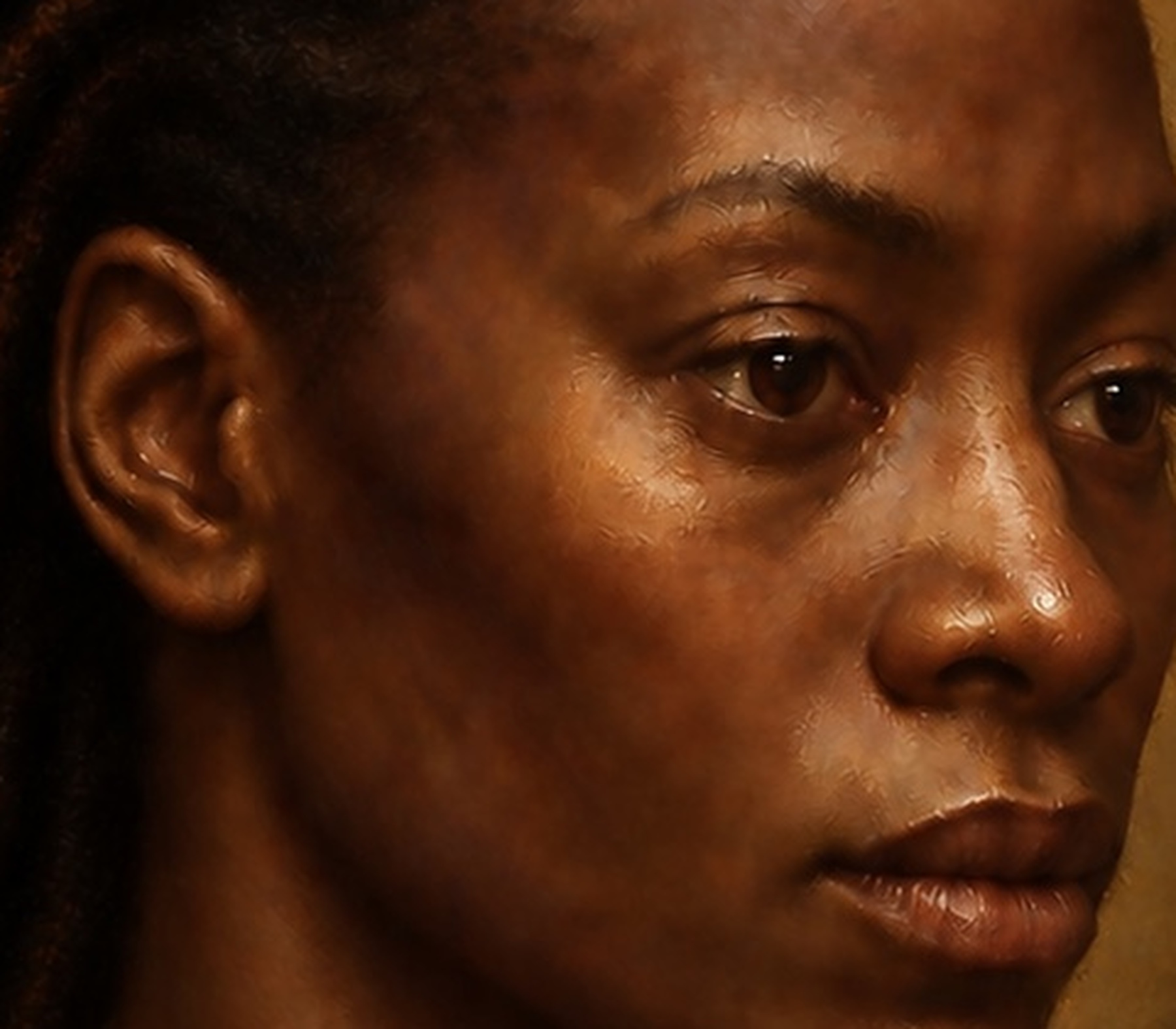
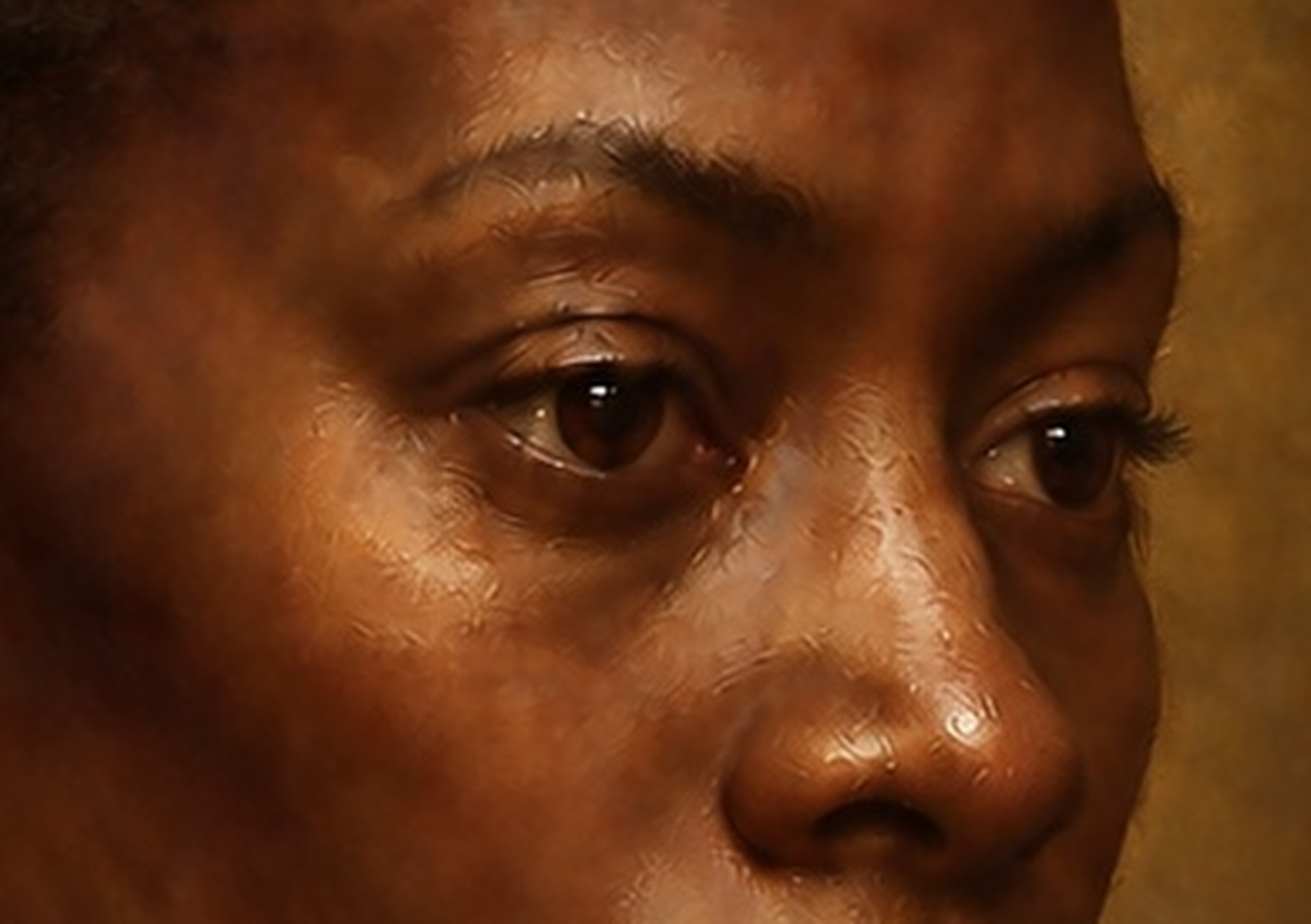
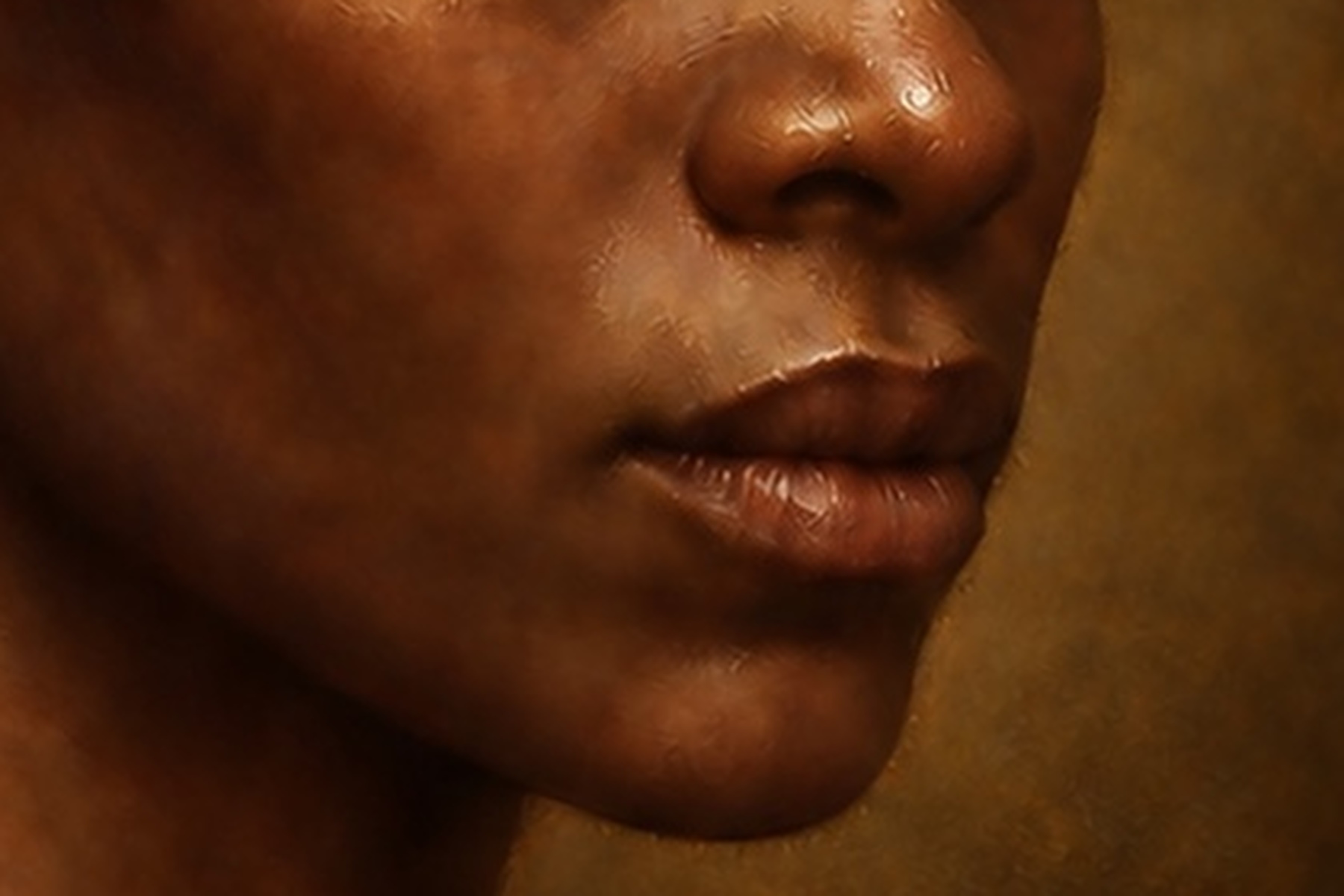
The anatomy was examined and corrected. The gaze was stabilised. Eyelids, highlights, lips, jaw and skin transitions were rebuilt. Repeated texture was broken. The garment was clarified. Edges were sharpened or dissolved according to attention. Tonal relationships were restored when local detail threatened the unity of the head.
This distinction matters because generation produces possibility, while reconstruction makes that possibility accountable to structure.
The Artist’s Hand Without Wet Paint
The absence of physical paint does not mean the absence of handling.
Handling can be understood as the way decisions move through a surface: where an edge is pressed, where colour is allowed to remain transparent, where light returns opaquely, where detail is withheld and where one passage is made dependent upon another.
In the digital studio, these decisions were made through selection, masking, correction, layering, erasure, compositing, enlargement and repeated comparison. The tools differed from brushes and oil medium, but the need to control relationships remained.
Close Inspection as Authorship
The image was judged at full composition, portrait scale, macro scale and microscopic scale.
Each view demanded a different kind of attention. The whole composition revealed hierarchy and presence. Portrait scale exposed proportion and modelling. Macro inspection revealed the construction of eyes, lips and skin. Microscopic inspection revealed repeated pixels, false reflections and mechanical texture.
Magnification did not authorise endless detail. It made restraint possible. The artist had to decide which marks described structure and which merely announced resolution.
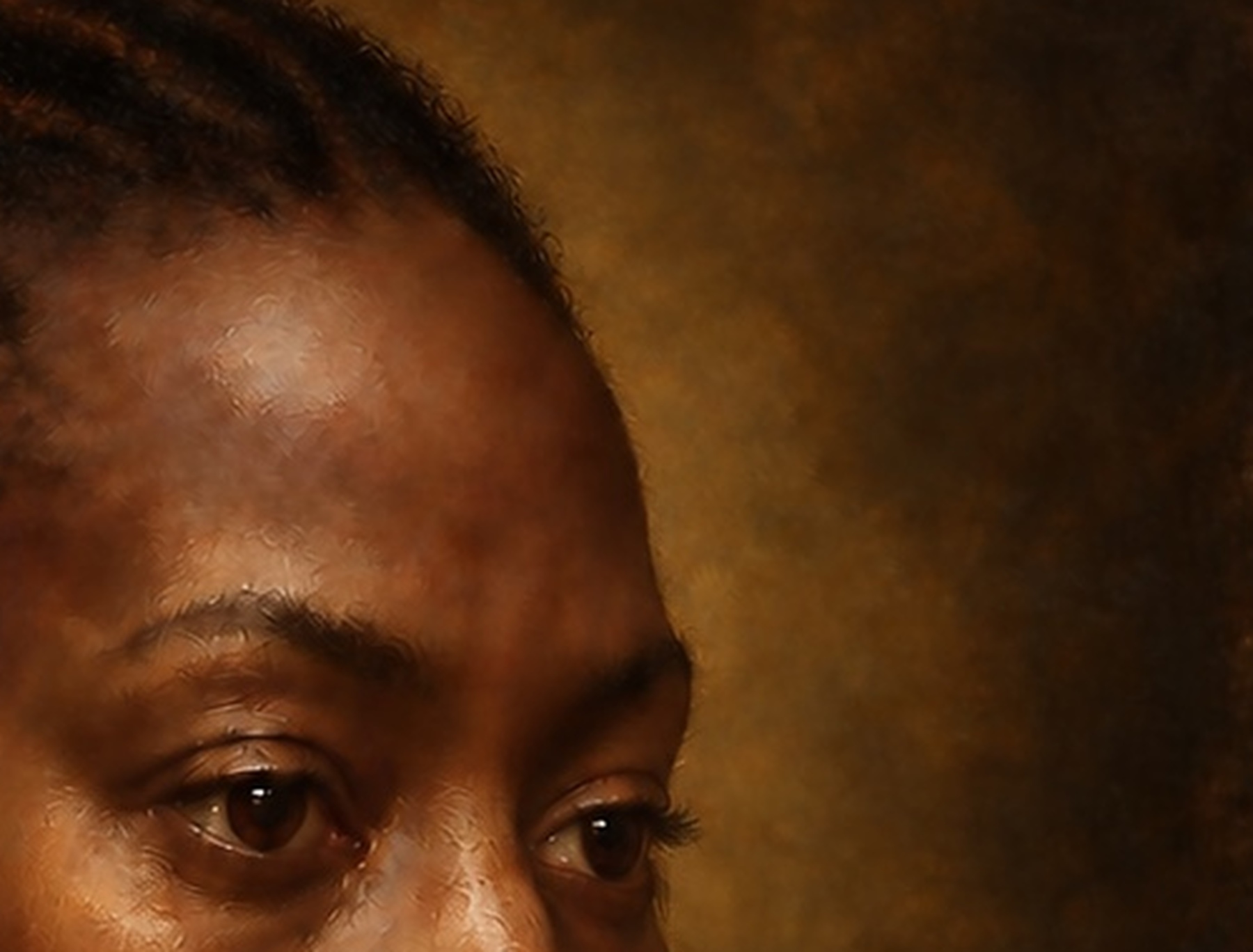
Correction Is More Revealing Than Generation
The first image shows what the system can produce.
The corrections show what the artist values.
Reducing an eye highlight, softening a jaw, breaking symmetrical eyelashes or withdrawing an unnecessary texture may appear less spectacular than generating a new image. Yet these decisions reveal a much clearer artistic position. They show what the work requires in order to remain coherent.
Correction is where general possibility becomes particular form.
Integration Is an Artistic Skill
A portrait can contain individually convincing passages that do not belong together.
An eye may be beautifully rendered but too sharp for the surrounding face. A mouth may be anatomically plausible but emotionally disconnected from the gaze. A garment may contain rich texture but draw attention away from the sitter. Integration resolves these conflicts.
The work was repeatedly returned to the whole. Every local improvement had to justify itself within the complete image. The final portrait is not a collection of successful details. It is a field of negotiated relationships.
The Artist Is Responsible for the Whole Image
Authorship carries responsibility as well as credit.
The artist cannot claim the successful passages and assign every weakness to the system. If the image contains a distortion, stereotype, implausible anatomy, misleading historical claim or unresolved material effect, responsibility remains with the person who selects and presents it.
The final approval transforms possibility into public statement. To publish, exhibit or sell an image is to accept responsibility for what it communicates.
The Sitter Is Not an Effect
The figure at the centre of the portrait could not be treated as an example of technical capability.
Her face, skin, hair, clothing and gaze construct a person-like presence. Even though she is not a documented historical sitter, the image invites viewers to encounter her as more than a demonstration of style.
This required resisting spectacle. The skin could not become a showcase for texture. The eyes could not be made brighter simply to appear alive. The costume could not substitute for cultural thought. The sitter had to remain the subject of the image, not the effect through which the technology advertised itself.
Representation Requires More Than Inclusion
Placing a Black woman within a Renaissance visual language is not sufficient by itself.
Inclusion can leave the deeper structure of an image unchanged. It can add a different body while preserving inherited ideas about who possesses authority, who becomes decorative and who is expected to be looked at without looking back.
The portrait therefore had to construct agency through scale, stillness, gaze, light, dress and compositional centrality. Representation became meaningful through the organisation of attention.
Cultural Position Cannot Be Automated
A system can reproduce cultural signs. It cannot occupy a cultural position.
It does not inherit a family history, encounter exclusion, choose an artistic lineage or decide what it means to place Black presence within a tradition that often marginalised it. Those relationships belong to people and communities.
The artist’s position determines why certain references matter and why particular visual decisions carry consequence. Technology can assist the making of the image, but it cannot supply the lived and intellectual position from which the image is made.
The Problem With “Style”
Style is often discussed as a detachable appearance.
A Renaissance style may be reduced to darkness, warm skin, rich fabric, aged texture and dramatic light. But historical painting is not only a bundle of visible features. It contains methods of construction, systems of patronage, material conditions, religious and political meanings, and decisions about whose presence deserves preservation.
To borrow appearance without engaging structure produces pastiche. The more demanding task is to learn from the intelligence of the tradition while allowing a contemporary subject and technology to change its meaning.
Influence, Reference and Imitation
Every artwork enters a field of previous images.
Influence becomes productive when it helps the artist understand a problem: how light models a cheek, how darkness can remain active, how a figure acquires authority or how colour gains depth through layering. Reference becomes limiting when it is used merely to reproduce a recognisable surface.
The aim was not to imitate one named painting or artist. It was to build a contemporary work through a broader study of historical methods, cultural memory and present-day tools.
Transparency Is Not a Confession
Describing an artwork as AI-assisted should not be treated as an admission of illegitimacy.
Transparency clarifies process. It allows viewers, collectors and institutions to understand which elements were digitally generated, how they were directed and reconstructed, and how the final physical work will be produced.
Honest description protects the artwork from false claims. The portrait is not an unearthed Old Master and no wet oil paint was used to create the digital master. Its value lies in what it does as a contemporary, artist-directed reconstruction.
Process Documentation as Provenance
The preserved stages form part of the work’s provenance.
Raw linen, prepared ground, underdrawing, tonal underpainting, dead colour, glazing, scumbling, final surface and macro corrections create a visible chain of development. They record not only how the image changed but why specific decisions were made.
For a digitally constructed artwork, this documentation can help distinguish a sustained artistic process from an isolated output. It supports authentication, scholarship, edition control and future conservation decisions.
Legal Authorship and Artistic Authorship Are Not Identical
Law and artistic judgement ask different questions.
Copyright frameworks determine whether and how particular contributions receive legal protection. Artistic authorship considers intention, meaning, cultural position, responsibility and the organisation of a work. The two can overlap without becoming identical.
Legal rules surrounding AI-generated material continue to develop across jurisdictions. The responsible position is to keep accurate records, avoid claiming certainty where law remains unsettled and distinguish the human-directed artwork from any unedited machine output.
Credit Should Follow Contribution
Credit becomes clearer when contributions are described rather than obscured.
The artwork credit should name Jabbi Delahaye as artist and director of the work, identify the process as digital and AI-assisted, and state that the master was developed through research, selection, reconstruction, correction, integration and final approval.
The technology need not be presented as a co-author. It should be acknowledged as part of the process in the same spirit that other consequential production methods are documented.
Authorship Is Not Measured by Difficulty Alone
Difficult work is not automatically meaningful, and efficient work is not automatically trivial.
Artists have always used tools to reduce labour, extend reach and make previously impossible forms available. The artistic question is not whether a process was sufficiently difficult. It is whether the work contains sustained intention, informed judgement and responsibility.
Ease can produce shallowness when it replaces enquiry. It can also create space for deeper exploration when saved labour is reinvested in research, revision and material resolution.
Authorship Is Not Measured by Manual Contact Alone
An artist can author a work without personally manufacturing every component.
Photography, printmaking, sculpture, film, architecture and conceptual practice already contain complex relationships between conception and execution. Fabricators, printers, performers, editors and technical specialists may contribute essential knowledge without dissolving the artist’s authorship.
Manual contact matters when it carries decisions. It is not the only place where decisions can exist.
The Limits of the Tool Remain Visible
The system’s limitations did not disappear from the process.
Anatomical inconsistencies, seductive false detail, excessive symmetry, confused reflections and generic historical signals had to be identified and corrected. These were not incidental inconveniences. They shaped the method.
The artist’s role expanded because the tool was powerful and unreliable at the same time. Greater fluency required greater scrutiny.
Chance Has Always Entered the Studio
Artists have never controlled every event.
Paint runs, pigments separate, paper absorbs unevenly, photographic exposure changes, materials resist and collaborators contribute unexpected solutions. Chance can introduce discovery, but chance does not complete the work.
The artist decides whether an accident belongs. Generative variation is another form of contingency: rich in possibility, indifferent to purpose until it is judged.
The Artist’s Eye Is Not a Mystical Gift
The artist’s eye is built through practice.
It develops through looking, comparing, studying, failing, correcting and learning to name the difference between an attractive passage and a structurally necessary one. Historical research, anatomical study, print proofing and repeated close inspection sharpened that capacity throughout this project.
Judgement may appear intuitive at the moment of decision, but intuition is often compressed knowledge.
Authorship Continues Into Printing
The completion of the digital file did not end authorship.
Paper choice, scale, colour management, black density, sharpening, borders, framing and gallery light change the work’s physical meaning. Hahnemühle German Etching offers a textured, painterly interpretation. Fuji Pearl offers a smoother, more luminous photographic reading.
Selecting between these possibilities is not administrative. It is an extension of the artwork.
The Final Approval Cannot Be Automated
A system can compare files, identify deviations and recommend adjustments.
It cannot decide whether the print carries the presence intended by the artist. That final judgement includes technical evidence, but it also includes atmosphere, emotional weight and the relation between the object and the viewer.
The last approval remains a human responsibility because approval is not merely detection. It is commitment.
A Practical Framework for AI-Assisted Authorship
The process can be described through ten connected responsibilities:
No single responsibility proves authorship alone. Together they describe a sustained creative practice.
Authorship as a Chain of Decisions
The finished portrait contains thousands of visible and invisible decisions.
Some are large: the choice of subject, the inheritance of Renaissance visual authority and the decision to construct a physical fine-art edition. Others are nearly microscopic: the width of a lip edge, the brightness of a corneal highlight, the survival of warm colour inside shadow.
Authorship lies in the chain that connects them. Remove that chain and the image becomes a result. Preserve it and the image becomes evidence of a practice.
What the Ten Articles Reveal
The ten companion articles make visible a process that the final portrait cannot show alone.
They move from ground, drawing and tonal architecture through colour, glazing, facial presence, imperfection, print translation and authorship. Each article examines a different responsibility, but none can be isolated from the others.
Together they argue that the artwork is not the last file. It is the complete system of thought, experiment, correction, material preparation and accountability through which that file acquired meaning.
Beyond the Prompt
The prompt has become a symbol because it is the most visible point of contact between person and system.
But visibility does not equal importance. The crucial work often occurs before the prompt, when intention is formed, and after it, when the returned image is judged, reconstructed and placed within a larger practice.
The prompt begins a conversation with possibility. Authorship determines what survives that conversation.
The Contemporary Atelier
The digital studio can be understood as a contemporary atelier.
It brings together historical knowledge, computational tools, image editing, colour management, specialist printing, framing and material experimentation. Its coherence does not come from using one medium. It comes from the artist’s ability to direct different forms of knowledge towards one work.
The atelier is therefore not a nostalgic recreation of the Renaissance workshop. It is a living structure for contemporary production.
A Contemporary Renaissance
A contemporary Renaissance cannot be built by copying the surface of the past.
It emerges when inherited knowledge is reopened through present identities, technologies and questions. The portrait honours historical discipline while refusing the historical restriction of who may occupy its centre.
The newness of the work lies not in technology alone. It lies in the relationship created between historical method, Black presence, digital construction and physical material ambition.
The Image Beneath the Image
Every finished image contains another image beneath it.
There is the drawing beneath the colour, the tonal structure beneath the flesh, the rejected version beneath the correction and the cultural question beneath the composition. There is also the labour of looking: the repeated act of asking whether each passage belongs.
The visible portrait is the surface expression of that deeper structure.
Conclusion: The Work Begins Where Automation Ends
Automation can accelerate production.
It can create options, extend technical possibility and make visual forms available to artists who work outside traditional material pathways. It can also produce confident images before the artist has discovered what the work needs to become.
The decisive work begins when fluency is no longer enough.
It begins with the refusal of the generic. It continues through research, correction, cultural responsibility, material translation and final approval. It asks the artist to know not only how to obtain an image, but why this image should exist and what obligations follow from presenting it.
The author is not the person who merely causes an output to appear.
The author is the person who gives the work its direction, criteria, coherence and responsibility.
A prompt can begin an image.
Authorship begins when the artist decides what must happen next.
SELECTED LINES
The work begins where automation ends
A prompt can begin an image. It cannot decide what the image should mean.
The appearance of an image is not the same as the completion of an artwork.
The first image shows what the system can produce. The corrections show what the artist values.
Prompting is not only description. It is negotiation with a visual archive.
The final approval transforms possibility into public statement.
Judgement may appear intuitive at the moment of decision, but intuition is often compressed knowledge.
The author is the person who gives the work its direction, criteria, coherence and responsibility.
Authorship begins when the artist decides what must happen next.
SUGGESTED IMAGE SEQUENCE
A visual record of direction, correction and responsibility
The published article uses the final portrait, process stages and available macro studies. This sequence records the complete future image programme for the concluding study.
- Opening image: Full view of the completed Renaissance-inspired portrait.
- Figure 1: The ten-article series mapped from ground and drawing to print and authorship.
- Figure 2: Comparison of an early generated proposal and the resolved final portrait.
- Figure 3: Selection-and-rejection contact sheet showing several discarded directions.
- Figure 4: Five-stage sequence—underdrawing, tonal underpainting, dead colour, glazing and final master.
- Figure 5: Macro eye comparison showing reconstruction of lid, reflection and edge control.
- Figure 6: Macro mouth and skin details showing correction, asymmetry and restrained texture.
- Figure 7: Diagram of the authorship chain—intention, research, direction, selection, reconstruction, integration, translation and responsibility.
- Figure 8: A3 proof details on Hahnemühle German Etching and Fuji Pearl.
- Figure 9: Framed gallery visualisation showing the work as a physical object.
- Closing image: The completed portrait with the full process archive arranged behind it.
FURTHER READING
Human contribution, accountability and authorship
Current institutional guidance and historical context for understanding authorship in AI-assisted and collaborative creative work.